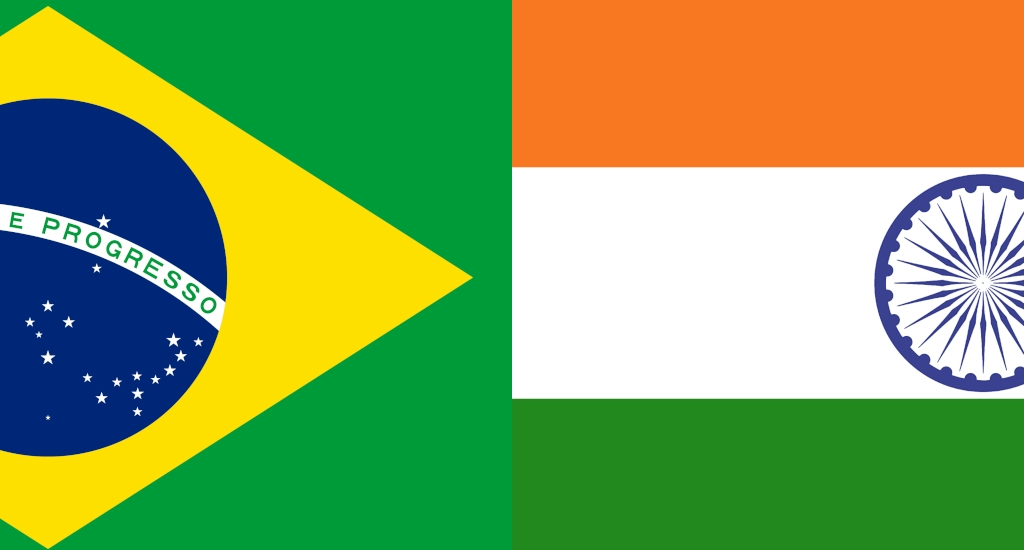
In a landmark move aimed at reshaping global supply chains, Brazil and India formalized a strategic partnership Saturday focused on the supply of critical minerals and rare earth elements essential for advanced technology. The announcement was made by Indian Prime Minister Narendra Modi alongside Brazilian President Luiz Inácio Lula da Silva during an official visit to New Delhi.
According to Brazilian news outlet G1, the agreement is designed to secure the raw materials and technological base necessary for the production of semiconductors, high-performance batteries, and sophisticated electronic devices. The deal is seen as a vital step toward reducing both nations’ reliance on volatile global supply chains and building domestic capacity in high-tech manufacturing.
The “Fuel” for Smartphones, AI, and Electric Vehicles
The partnership extends beyond raw mining to include technical cooperation and investment in the processing and application of these minerals. The focus areas include:
- Energy and Mobility: High-density batteries for electric vehicles and photovoltaic cells for solar panels.
- Consumer Hardware: Components for smartphones and next-generation electronics.
- Defense and Aerospace: Advanced alloys for jet engines and missile systems requiring ultra-resistant materials.
Brazilian officials emphasized that the goal is to move beyond simply exporting raw materials. The country aims to process these minerals domestically, adding value and fostering homegrown technology industries.
Strategic Push for AI and Independence from China

The agreement was signed during a global summit on Artificial Intelligence, underscoring the direct link between mineral supply and the infrastructure needed for data processing and AI development.
For India, the deal is a strategic maneuver to reduce its technological dependence on China, which currently dominates the global refining of rare earths. Brazil, home to the world’s second-largest reserves of these minerals, is positioned as a key supplier and partner in building “resilient supply chains,” Modi said, in the face of ongoing geopolitical tensions.
Expanding Tech Ties Across Asia
Trade between Brazil and India surpassed $15 billion in 2025, and both nations aim to reach $20 billion by 2030, with a strong emphasis on innovation and renewable energy. Following the signing in New Delhi, the Brazilian delegation is headed to South Korea to meet with President Lee Jae-myung and participate in a business forum focused on semiconductors and electronics, with the goal of attracting further investment to Brazil’s industrial sector.
The new agreement marks a significant step in the broader effort by both countries to assert themselves as independent players in the global technology landscape, leveraging their natural resources and growing industrial capabilities to compete in the 21st-century economy.
Source: Globo
Like my content? Support me with a tip!