Update: Launch was successful!
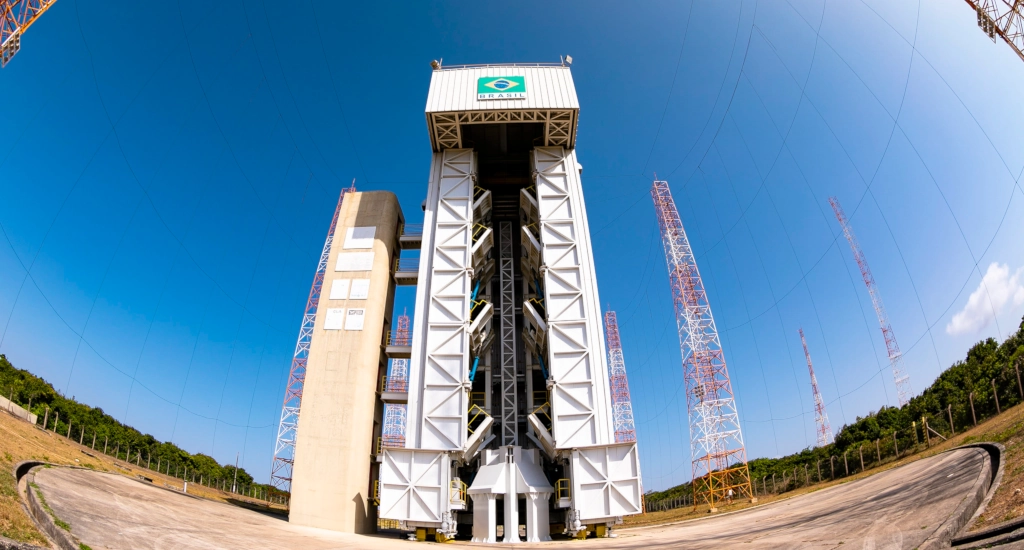
The Alcântara Launch Center in Maranhão is Brazil’s most renowned spaceport, but the Brazilian Air Force (FAB) is preparing to expand the nation’s space capabilities. On November 29, Brazil will launch a rocket from the Barreira do Inferno Launch Center (CLBI) in Parnamirim, Rio Grande do Norte, as part of Operação Potiguar.
According to the FAB, this initiative addresses the growing demand for space launches, with Alcântara already 85% booked for 2025. The new launch site will enable Brazil to meet the increasing global need for suborbital experiments and technological testing. “This allows the country to support the worldwide demand for suborbital launches for scientific and technological experiments, such as the Brazilian Space Agency’s (AEB) Microgravity Program, which is also part of Operação Potiguar,” stated Air Lieutenant Brigadier Maurício Augusto Silveira de Medeiros, Director-General of the Department of Aerospace Science and Technology (DCTA).
CLBI’s Revitalized Role
CLBI specializes in tracking and monitoring rockets and satellites, analyzing trajectories, and collecting performance data. The November launch will reactivate the center’s ability to support suborbital missions.
The rocket to be launched, the VS-30, measures eight meters and uses nearly one ton of solid fuel. This test aims to train CLBI personnel and validate equipment and procedures. “The rocket is expected to follow its trajectory within the predicted dispersion and ensure radar and telemetry systems function correctly throughout the flight,” the FAB explained.
Future Plans
The November mission marks just the beginning. In 2025, CLBI will launch another VS-30 to test the recovery system of its upper section, known as the Suborbital Microgravity Platform (SMP). This platform houses experimental compartments and electronic systems that interact with the payload.
Designed by Brazil’s Institute of Aeronautics and Space (IAE), the VS-30 is a single-stage sounding rocket, launched via rail, capable of reaching altitudes over 150 kilometers at speeds of up to 6,000 km/h.
Brazil’s Space Program: A Brief History
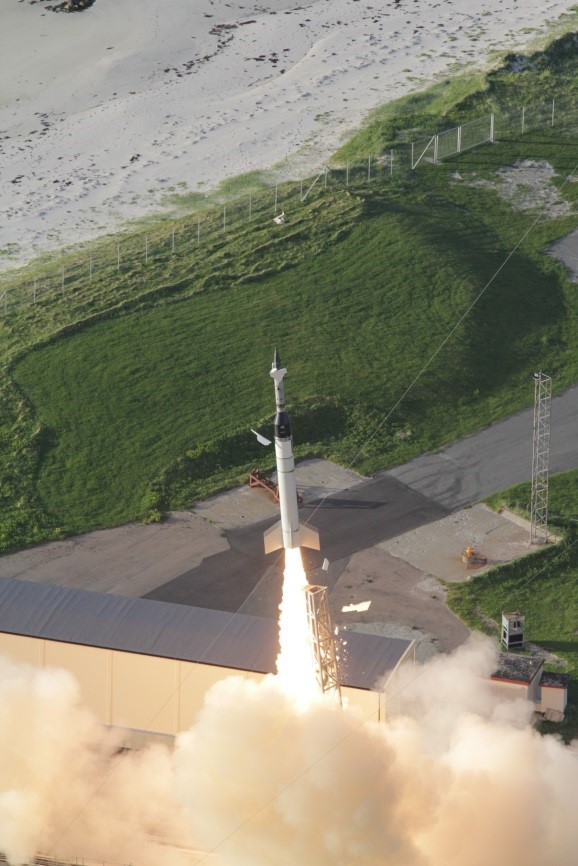
Brazil’s space program began in the 1960s with the establishment of the Barreira do Inferno Launch Center (CLBI), the country’s first spaceport. Over the years, Brazil has developed several rockets, including the Sonda series and the more recent VS (Veículo de Sondagem) models. The Sonda I, first launched in 1965, marked Brazil’s entry into rocket technology, followed by Sonda II, III, and IV, each advancing in complexity and payload capacity.
In the 1990s, the VS series took center stage, with rockets like the VS-30 and VS-40 designed for suborbital experiments. These rockets have been instrumental in scientific research, including atmospheric studies and microgravity experiments. Notable tests include the successful launch of the VS-40 in 2015, carrying the SHEFEX II mission in collaboration with Germany, and the VS-30/Orion missions, which have provided valuable data on vehicle performance and payload integration.
With consistent progress, Brazil’s space program now supports international collaborations and positions the country as a growing force in the global aerospace industry, leveraging advanced technology and its strategic geographic advantages.
Source: Brazilian Gov, Wikipedia
Like my content? Support me with a tip!