
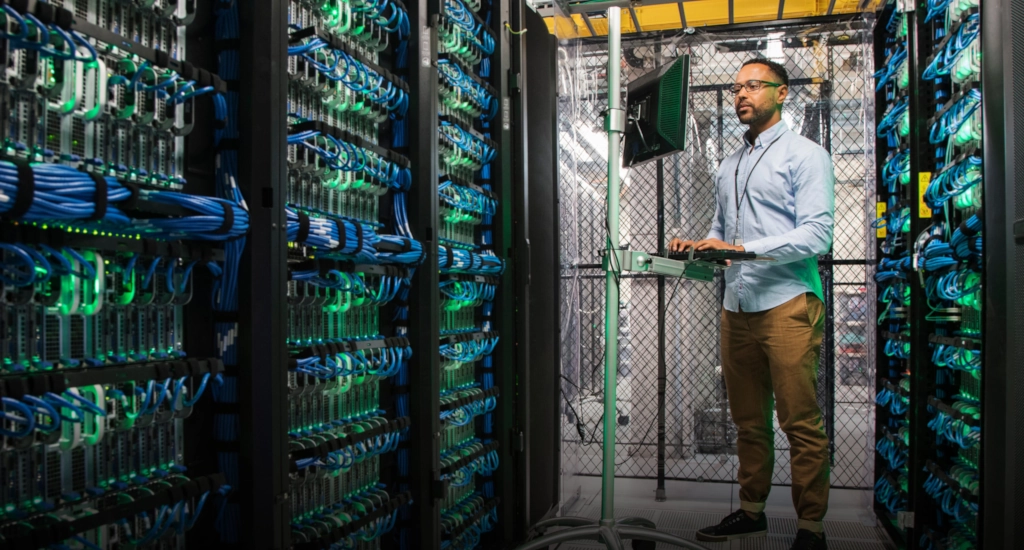
Brasília, 30/07/2024 – Today, the Lula administration unveiled Brazil’s ambitious artificial intelligence (AI) plan, pledging a total investment of R$ 23 billion by 2028. According to documents obtained by UOL, one of the plan’s main objectives is to build a powerful supercomputer capable of ranking among the world’s top five. Currently, the top five includes machines from the United States, Europe, and Japan, with investments ranging from R$ 877.9 million to R$ 3.3 billion.
Developed over five months, this policy emerges amid a global frenzy over generative AI—technology that can create content. Internally considered a significant advancement, the plan does not aim to position Brazil against leading AI powers like China and the United States. Instead, it seeks to foster domestic technology development without reliance on big tech companies, and elevate Brazil to a status where it can share infrastructure and research projects with Latin American and African countries.
“The sovereign cloud is for us not to rely on the storage capacity that is currently heavily invested in large international companies.”
– Luciana Santos, Minister of Science and Technology
A government insider described the plan as a starting point that will undergo continuous revision due to the rapid advancement of technology. “It is not about competing with the U.S. and China, but Brazil can position itself very well,” they said.
The Lula administration intends to showcase this initiative to the international community, presenting it at the G20 meeting in Rio de Janeiro in November and the opening session of the UN General Assembly in September.
Key Actions and Investments
Developed by the Ministry of Science, Technology, and Innovation, the proposal includes actions already in progress, set to launch within the next 12 months. These include over 30 tools for health (cancer, pneumonia, and tuberculosis diagnostics, automated medicine purchases), climate (weather event predictions), labor (AI-based hiring), and public safety (video management). The estimated investment for these applications is R$ 435 million.
The plan’s core is divided into five thematic areas:
- Infrastructure: The government aims to allocate R$ 5.79 billion to upgrade the Santos Dumont supercomputer at the National Laboratory for Scientific Computing (LNCC) in Petrópolis, RJ, from 5.1 petaflops/s to 17 petaflops/s. Despite this, reaching the top five globally remains a formidable challenge, with the current leaders boasting capacities from 442 petaflops/s to the Frontier’s 1,206 petaflops/s.
- Training and Education: R$ 1.15 billion will be invested in training professionals and academics in AI research.
- Public Service Improvement: With an investment of R$ 1.76 billion, this axis aims to enhance public services using AI.
- Business Innovation: R$ 13.79 billion will fund companies developing AI initiatives and encourage AI startups.
- Regulation and Governance: This axis will focus on risk assessments for AI tools and creating experimental environments, or “sandboxes,” with an investment of R$ 103 million. Legislative support will be crucial for this part, as the relevant bill is currently pending in the Senate.
Funding Sources
The AI plan’s funding will come from various sources:
- BNDES, Finep, and FNDCT credits: R$ 12.72 billion
- Non-reimbursable FNDCT resources: R$ 5.57 billion
- Annual Budget Law: R$ 2.9 billion
- Private sector investments and counterpoints: R$ 1 billion
- State-owned companies: R$ 430 million
- Other sources: R$ 360 million
Lula’s Perspective
During the conference, President Lula emphasized the importance of investing in human capital alongside technology. He humorously questioned the term “artificial intelligence,” advocating for a synergy between human intelligence and AI development.
“This AI thing is good, but why is it called artificial if it can be enhanced by human intelligence?” Lula mused.
Luis Manoel Rebelo Fernandes, Executive Secretary of the Ministry, praised the plan as both audacious and realistic, emphasizing Brazil’s ambition to develop its technology rather than just applying existing solutions.
With this comprehensive strategy, Brazil aims to assert its presence in the global AI landscape, balancing ambitious technological goals with practical, incremental advancements.
Source: Brazilian Government
Like my content? Support me with a tip!