
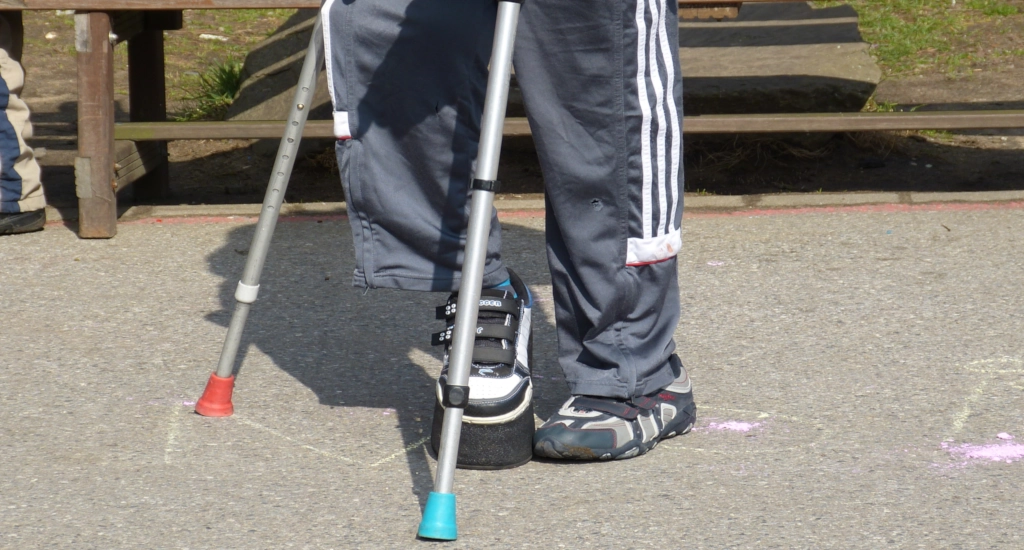
Brazilian scientists unveiled groundbreaking research that could revolutionize the treatment of spinal cord injuries. The initiative, spearheaded over 25 years by Professor Tatiana Coelho de Sampaio from the Federal University of Rio de Janeiro (UFRJ), in partnership with Cristália laboratory, has shown that a protein extracted from the placenta, called polylaminin, has been able to restore movements in animals and some human patients during the experimental phase.
Polylaminin is a laboratory-recreated version of the protein laminin, which is abundant in the human body during the embryonic stage and crucial for neuronal communication. After birth, the presence of this protein drastically decreases.
The UFRJ team discovered that when reapplied, polylaminin can stimulate neurons to create new communication pathways, partially reestablishing the electrical impulses disrupted by spinal cord injury. These injuries, often caused by traffic accidents, falls, or diving incidents, can sever the connection between the brain and body, resulting in paraplegia (loss of lower limb movement) or quadriplegia (impairment of movement from the neck down).
“This is unprecedented because no study has demonstrated this so far, anywhere in the world,[…]If we look today, we won’t find any study worldwide with medication acting on spinal cord regeneration that has achieved this.”
– neurosurgeon Marco Aurélio Brás de Lima
Two of the eight patients who received the experimental treatment did not survive the initial injuries. The remaining six patients showed varying degrees of motor recovery. For instance, Silvânia can now lift her legs and pedal. Guilherme regained mobility in his arms, hands, and abdomen. Artisan Nilma Palmeira de Melo recovered body control, operates her wheelchair, and has achieved something remarkable.
“To stand up, because the doctor said I wouldn’t be able to. I was almost dancing with joy,”
– Nilma Palmeira de Melo recounted.
Results in Animals and First Human Patients
Initial tests were conducted on dogs and rats with spinal cord injuries. In some cases, these animals resumed walking within a few days, a result published on the MedRXiv platform in 2024.
Subsequently, the team moved to an experimental academic study involving a few human patients who had recently suffered accidents. One of these patients, Bruno Drummond de Freitas, experienced a severe cervical injury but gradually recovered movement in his feet, legs, and arms. Another case, paralympic athlete Hawanna Cruz Ribeiro, reported regaining between 60% and 70% control of her torso.
It is important to note that none of the patients immediately “returned to walking normally.” Significant motor gains were achieved, representing an unprecedented advancement for cases previously deemed irreversible.
Public-Private Collaboration and Regulatory Challenges
The development of this medication is the result of a rare collaboration between a public university and the private sector. UFRJ’s Extracellular Matrix Biology Laboratory, led by Tatiana Sampaio, provided the scientific foundation, while Cristália laboratory focused on producing the compound.
However, ANVISA, Brazil’s health regulatory agency, informed Canaltech that the data presented thus far belongs to the pre-clinical phase (without human use within regulatory standards). There is no pending request for this study awaiting ANVISA approval. There is a process, but it still requires additional data from the company. According to the agency, while laboratory results are promising, it cannot yet make any claims regarding the substance’s safety and efficacy.
Like my content? Support me with a tip!




I suffered a spinal cord injury in August 2023, and since then I have been paraplegic. Reading about this polylaminin research gives me hope. I would be very grateful for guidance on how to reach the Brazilian doctors or laboratories involved, as I wish to explore whether I could participate in future studies or trials. Any help connecting me with the right contacts would mean a lot.
you’d need to contact UFRJ(Universidade Federal do Rio de Janeiro) or Tatiana Coelho directly to try and apply. While UFRJ has a website with a contact form, I couldn’t find Tatiana’s e-mail