
A groundbreaking system capable of generating green hydrogen without carbon emissions, using only solar light, water, and readily available raw materials in Brazil, has been developed by researchers from the Center for Innovation in New Energies (CINE). This innovative device, known as a photoelectrolyzer, has demonstrated successful performance in both laboratory and outdoor tests, as reported in a recent article published in the ACS Energy Letters journal.
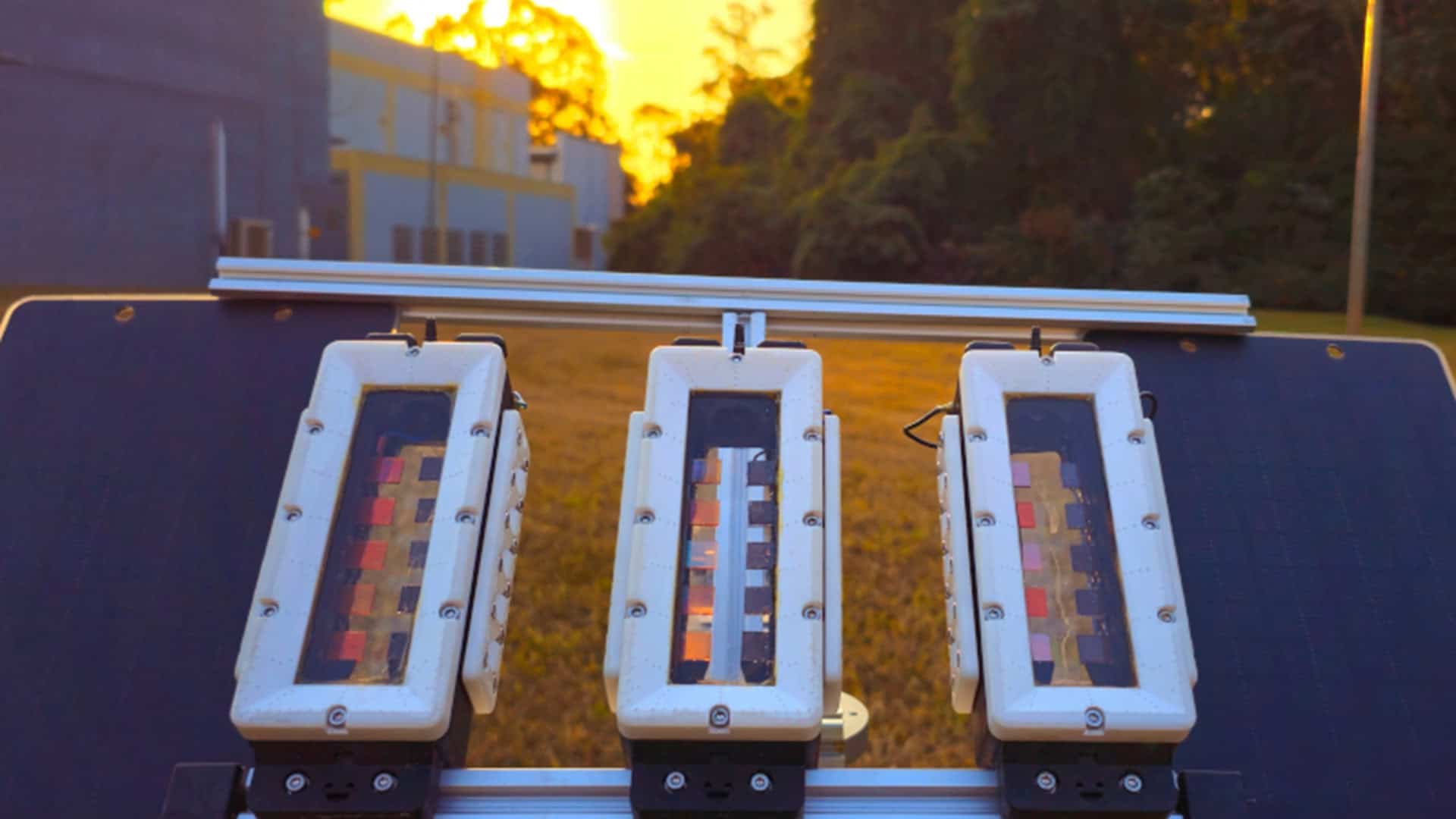
The photoelectrolyzer prototype stands out as a promising solution for the production of green hydrogen due to its self-sufficiency in energy—it does not require connection to an external power source, thanks to the presence of a photoanode. The photoanode, one of the two electrodes in the device, absorbs sunlight and uses this energy to facilitate electrochemical reactions that split water molecules and release hydrogen. The creation of stable, efficient photoanodes with low-cost materials has been a longstanding challenge in the scientific community.
Lead researcher Flavio Leandro de Souza, a professor at the Federal University of ABC (UFABC), researcher at the National Nanotechnology Laboratory (LNNano) of the National Center for Energy and Materials Research (CNPEM), and member of CINE, highlighted the significance of their achievement to Agência FAPESP.
“In this work, we present an essential breakthrough by overcoming one of the main challenges in the field: obtaining an efficient, stable, and scalable hematite photoanode.”
– Flavio
Hematite, an iron oxide abundant in nature and resistant to water contact, has been identified as a promising material for photoelectrolysis. The research team enhanced its efficiency by incorporating small amounts of aluminum and zirconium oxides—both of which are readily available in Brazil—without affecting the material’s stability.
Focused on scalability, the researchers devised a production method for photoanodes that could be adapted for industrial use. They manufactured 100 identical units, which were used to assemble a modular system: each set of ten photoanodes forms a photoelectrolyzer, and ten such devices can be combined into a 1 m2 module.
Prototype Reactor Tests
- In the laboratory, the system operated stably for 120 hours under a solar light simulator.
- A prototype consisting of two photoelectrolyzers was also tested outdoors, maintaining the same efficiency observed in indoor tests, thus demonstrating robustness.
- The development and testing took place at CNPEM, involving six researchers and collaborating with Professor Renato Gonçalves from the Institute of Physics of São Carlos at the University of São Paulo (IFSC-USP), who built the large-area solar light simulator used in the experiments.
- Currently, the team is working on the development of the second electrode, the cathode, aiming for it to also operate solely on solar energy.
According to Flavio, the modular system could offer significant advantages to industries requiring green hydrogen at specific points in their processes, allowing for direct injection of the gas into operations. The system’s modularity makes it adaptable to the specific needs and capacities required for various applications.
“The next step, already in progress, is a module operating 100% on solar irradiation, with each photo reactor composed of a photoanode and photocathode.”
– Flavio
Future Plans
Scaling up the production of these devices is on the horizon for the team, but it demands substantial investments in infrastructure and safety for the necessary testing phase. “This is a crucial stage, and collaboration with interested companies is vital,” Souza emphasized.
The research also received funding from FAPESP through the Center for Molecular Engineering Research for Advanced Materials (CEMol), underscoring the importance of supporting cutting-edge developments in sustainable energy solutions.
This development positions Brazil as a potential leader in green hydrogen production, leveraging its natural resources and technological advancements to contribute to global efforts in reducing carbon footprints and promoting renewable energy.
Source: Olhar Digital
Like my content? Support me with a tip!