Brazil has been a global pioneer in adopting electronic voting systems, with its voting machines—known as urnas eletrônicas—playing a critical role in the country’s democratic process. These machines have revolutionized elections, improving efficiency, accessibility, and transparency. Despite ongoing discussions about their security and reliability, the Brazilian voting machine has demonstrated resilience and has been continually improved over the years.
This article delves into the history of Brazilian electronic voting, how these machines work, and the safety measures implemented to protect the integrity of the election process.
History of the Brazilian Voting Machine
Brazil’s transition to electronic voting began in the mid-1990s. Before this, elections were conducted using paper ballots, which were prone to manipulation, fraud, and slow vote counting, especially in such a large and diverse country. In the 1980s, growing public demand for greater electoral transparency and efficiency led the Brazilian government to explore more secure and reliable ways to conduct elections.
In 1996, Brazil introduced electronic voting machines in a limited capacity, initially used in municipal elections. The machines showed such promise in terms of ease of use and faster results that the government rapidly expanded their use. By the 2000 general elections, the entire country was using electronic voting machines, making Brazil one of the first nations in the world to implement a fully electronic voting system on such a large scale.
How the Brazilian Voting Machine Works
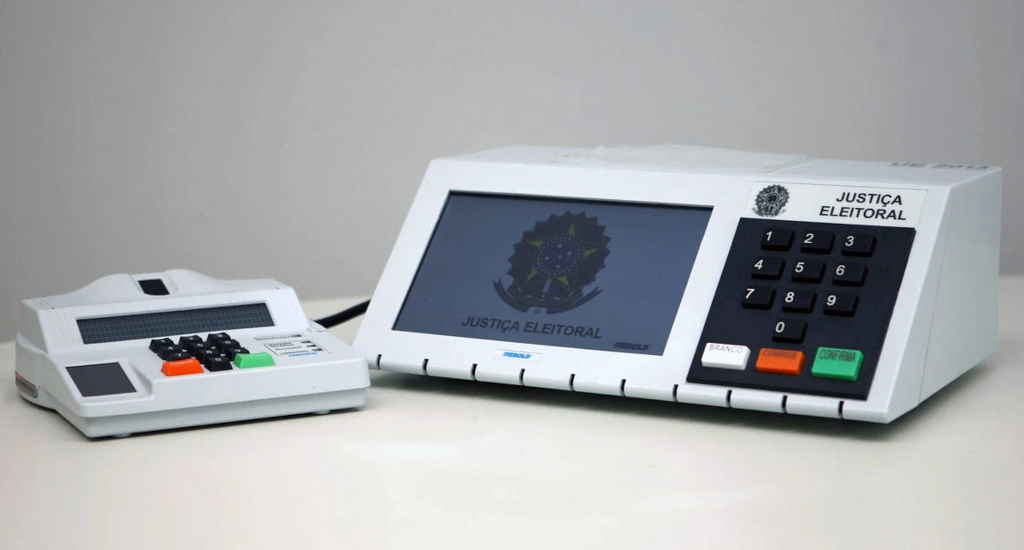
Brazilian voting machines, commonly referred to as urnas eletrônicas, are essentially standalone electronic devices designed to securely collect and record votes. Here’s a simplified breakdown of how they operate:
- Hardware: The urna consists of two main components: the control panel and the voting terminal. The control panel is operated by an election official to verify and unlock the machine for each voter, while the voting terminal is where the voter inputs their choices.
- Voting Process: After voter verification (through an ID or biometrics), the official authorizes the machine, and the voter proceeds to the voting terminal. Voters input their selections by typing in a unique code for each candidate or option, which is displayed on the screen for confirmation. If the voter confirms their choice, the vote is recorded in the machine’s memory.
- Storage and Transmission: Each machine has secure, encrypted internal storage. Once voting is complete, the machine is sealed, and vote data is digitally transferred either through secure data networks or via physical data transport (USB-like devices) to a central tallying center.
- Paperless System: One of the defining features of Brazil’s voting machine is that it does not generate a paper trail. All votes are digitally encrypted and stored, leading to faster vote counting, but this has also sparked some controversy regarding potential auditability.
Safety and Security Measures
Brazil’s voting system has faced scrutiny over the years, with critics questioning its vulnerability to fraud or hacking. However, the Brazilian electoral authority (TSE – Tribunal Superior Eleitoral) has implemented several security layers to protect the machines and the election process:
- Independent and Isolated System: The voting machines operate in a completely closed environment, with no connection to external networks, including the internet. This reduces the risk of remote hacking attempts.
- Encryption: Votes are stored using strong encryption methods. Each vote is recorded in a sequence that remains unreadable without specific keys held by the TSE, ensuring that data cannot be tampered with.
- Public Testing: The TSE conducts periodic public tests, known as the “Public Security Test” (TPS), where ethical hackers, researchers, and members of civil society are invited to try to breach the system. Any vulnerabilities identified are addressed in subsequent versions of the software or hardware.
- Digital Signature: Before election day, each voting machine is inspected, and its software is digitally signed by the TSE. This ensures that the software running on the machine is authentic and untampered with.
- Auditability and Verification: Although the machines do not produce paper receipts, several other auditing mechanisms exist. After the election, voting machines generate a “digital ballot box” (Boletim de Urna) that lists the results, which are publicly posted at polling stations and uploaded to the TSE website. These results can be compared by citizens, political parties, and observers to ensure consistency.
- Biometric Verification: Since 2008, Brazil has been gradually implementing biometric voter identification (fingerprints) to further enhance security and prevent voter fraud, such as multiple voting or identity theft.
- Redundancy and Backup Systems: To safeguard against hardware failure, each voting machine contains backup systems and protocols. Votes are stored on multiple devices, and the machines have batteries to ensure they work even in areas with unstable electricity.
Challenges and Controversies
While Brazil’s voting machines have generally performed well over the years, they have not been without controversy. Political figures and some segments of the public have raised concerns about the transparency and auditability of the system, especially the absence of a paper trail.
The lack of a physical paper record of each vote has been a point of contention. Critics argue that it limits the ability to perform a comprehensive audit in case of disputes. Some have called for the implementation of voter-verified paper audit trails (VVPAT), which would allow voters to confirm their choices with a printed receipt before submitting them electronically.
In response to these concerns, the TSE has explored the feasibility of incorporating paper verification mechanisms in future models of the voting machines. However, it has maintained that the current system is secure, transparent, and reliable, citing the absence of verified fraud cases as proof of its integrity.
Evolution and Future of the Brazilian Voting Machine
The Brazilian voting machine has undergone continuous upgrades since its inception in 1996. The TSE regularly updates the software and security protocols to address new challenges and vulnerabilities. In recent years, they have also focused on expanding biometric voter identification and exploring ways to enhance transparency.
Moving forward, Brazil’s electoral authority continues to explore innovations that can improve both the security and the perception of trust in its electronic voting system. Discussions about the use of blockchain technology for vote auditing or integrating more advanced encryption techniques are ongoing.
Like my content? Support me with a tip!