
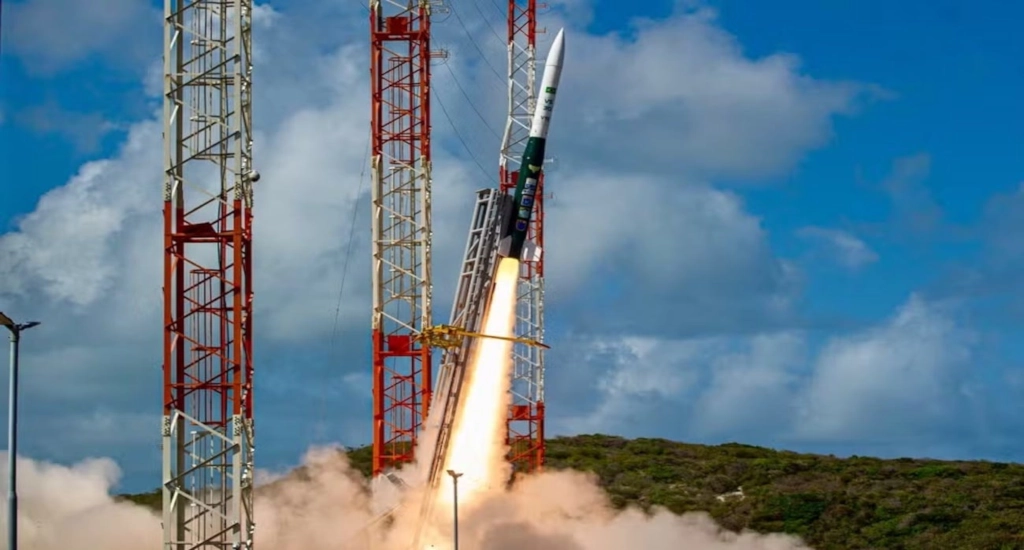
At the 2025 SpaceBR Show, Marco Antonio Chamon, President of the Brazilian Space Agency (AEB), unveiled Brazil’s strategic plans to expand its role in the global aerospace sector. In an interview with Canaltech, Chamon emphasized the country’s efforts to gain technological autonomy through new satellite missions, rocket development, and international partnerships.
Suborbital Launch with the VS-30 Rocket
A major milestone is expected between October and November this year, when Brazil plans to launch the suborbital VS-30 rocket from the Barreira do Inferno Launch Center in Rio Grande do Norte. The vehicle, a well-established rocket model in Brazil, is projected to reach an altitude of 200 kilometers during an eight-minute parabolic flight.
“This rocket is highly reliable and has a long history in Brazil,[…]For the first time, it will carry a new module designed to transport payloads for scientific experiments.”
– Chamon
It’ll be the second time this rocket is tested in the past year.
Several companies have already shown interest in using the launch to test their technologies. Due to the experimental nature of the new payload module, the test flight will be offered at no cost to the participants.
Commercial Launch from Alcântara in 2025
Chamon also highlighted the upcoming use of Brazil’s Alcântara Launch Center (CLA), located in Maranhão, by South Korean startup Innospace. The company plans to launch its HANBIT-Nano rocket in the second half of 2025—delayed from the originally scheduled July 2025 window.
“This is a commercial operation involving a rocket that will place multiple satellites into orbit, both for national and international clients,[…]If successful, it will mark the beginning of regular commercial activity at the Alcântara spaceport.”
– Chamon
Amazônia-1B: The Next Step in Earth Observation
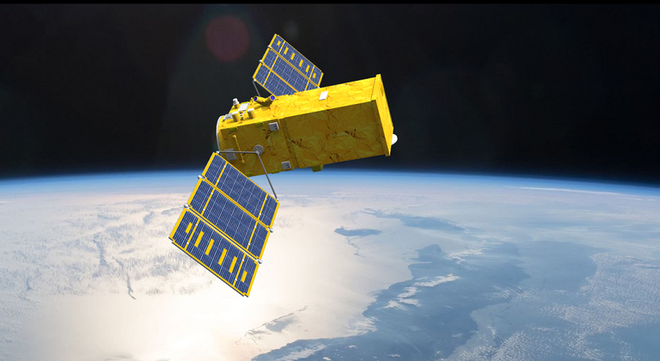
Looking further ahead, Brazil is preparing to launch the Amazônia-1B satellite in 2026. This advanced Earth observation satellite follows in the footsteps of Amazônia-1, the first satellite fully designed and developed in Brazil, which was launched in 2021.
The Amazônia-1B will feature a new camera system with improved resolution—20 meters per pixel, compared to 60 meters in the original. This enhancement will allow for clearer, more detailed imagery, improving the satellite’s ability to monitor Brazil’s land and marine water resources, as well as atmospheric conditions.
“A single pixel from the new camera will cover a 20-by-20-meter area, offering much finer detail,” Chamon noted.
VLPP: Small Launch Vehicle
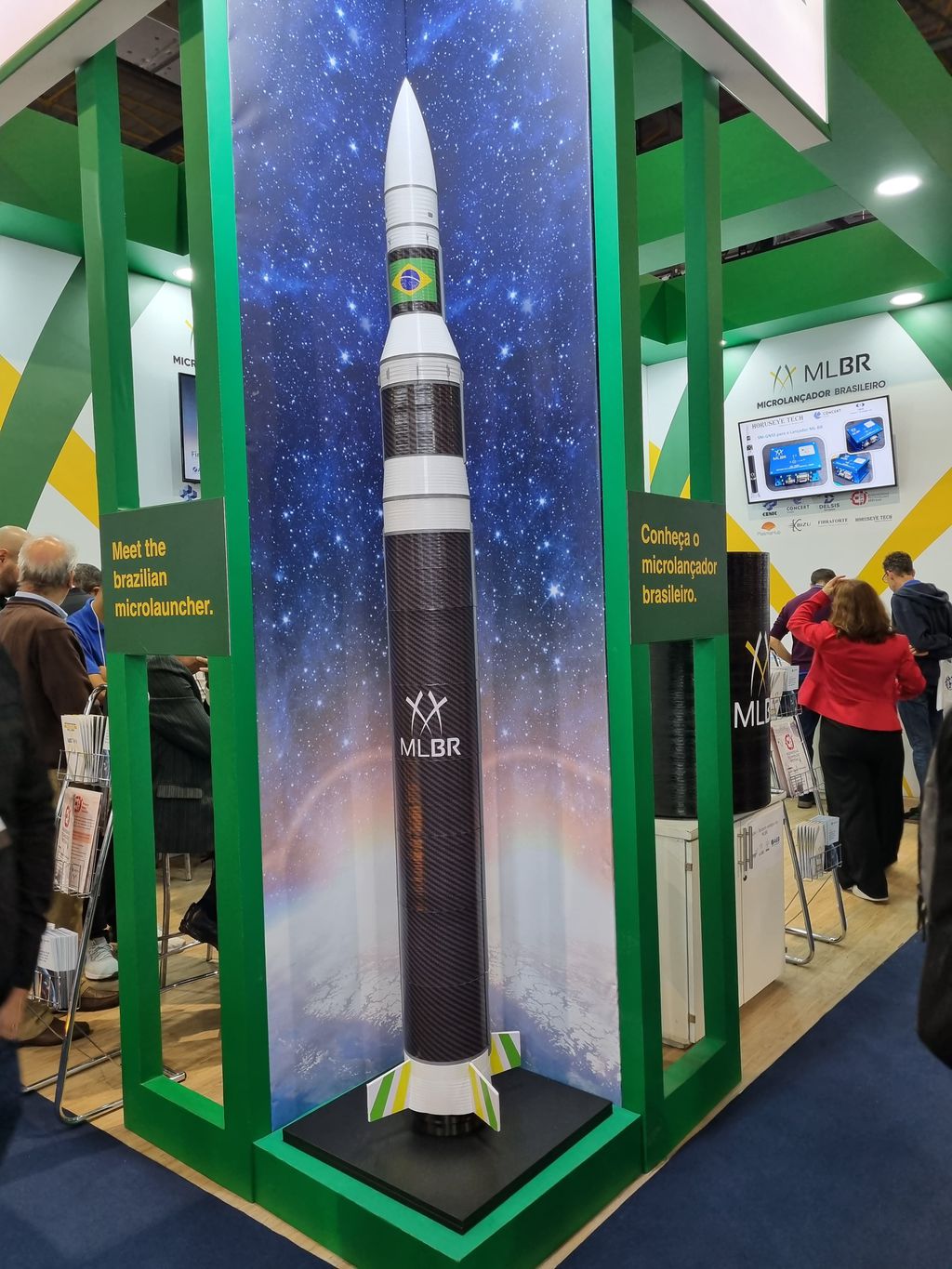
Brazil is also preparing to take a significant step toward space autonomy with the upcoming debut of its Small Launch Vehicle (Veículo Lançador de Pequeno Porte – VLPP), known as MLBR — the “Microlançador Brasileiro”(Brazilian Microlauncher). Unveiled at the SpaceBR Show on June 3, the MLBR is expected to make its first flight in 2026.
Standing 12 meters tall with a 1.1-meter diameter, the rocket will be capable of carrying payloads of up to 40 kg. Designed to meet the growing global demand for small satellite launches, it targets sectors such as telecommunications, agriculture, environmental monitoring, and security.
Having completed key development phases, including the Preliminary and Critical Design Reviews (PDR and CDR), the project is now entering the manufacturing and qualification stage. The next major milestone will be the Systems Qualification Review (SQR), which will assess the readiness of the vehicle’s subsystems, including propulsion and structural components.
Among the standout technologies in the MLBR is its Inertial Navigation System (INS), which enables precise tracking of the rocket’s position and trajectory without relying on GPS. The rocket will also feature a shift from solid to liquid propulsion in its third stage, marking a technological leap for Brazilian rocketry.
Source: CanalTech
Like my content? Support me with a tip!