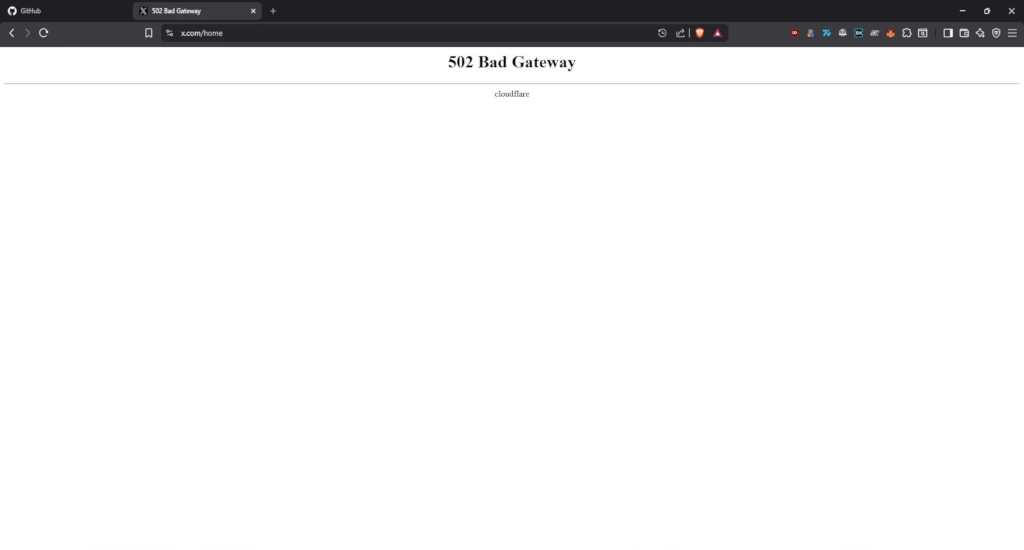
Cloudflare’s global network suffered fresh instabilities on the morning of December 19, 2025, causing slowdowns and access problems for several popular platforms including X (formerly Twitter) and Discord. Outage trackers reported a surge of user complaints: Downdetector showed an increase in reports between 07:53 and 09:23 (Brasília time), and—according to Downdetector—peaked at 12:01 with more than 800 notifications. This is the latest in a string of recent incidents after a historic outage in November and further disruptions in early December.
On its public status page they said “Cloudflare is investigating intermittent issues with network performance. Customers might observe unexpected errors. We are working to analyze and mitigate this problem. More updates to follow shortly.” while the company worked to analyze and mitigate the problem. The status page also shows scheduled maintenance in several data-centres on December 19, including a maintenance window for MCI (Kansas City), which began at 10:00 UTC (07:00 BRT) and may have played a role in route changes and degraded performance seen by some users.
This outage is part of multiple short but intense periods of instability for the company. Cloudflare’s own post-mortems and outside analyses show multiple significant incidents in recent weeks — notably the November 18 outage that impacted a wide slice of the web and a December 5 incident that Cloudflare said affected a substantial portion of HTTP traffic handled by its network. Those events have repeatedly knocked access to high-traffic sites and services, underlining how problems at a single provider can ripple across the internet.
Cloudflare engineers continued to investigate through the day and issued updates on their status page as they worked on mitigation. Some services experienced intermittent errors and elevated latency while traffic was re-routed; by later updates Cloudflare reported progress on analysis and mitigation, though the company has not yet published a full post-incident report for this December 19 event at the time of writing.
CDNs like Cloudflare are a hugely useful service — its CDN, DDoS protection and DNS offerings accelerate and secure millions of websites — but repeated outages expose a brittle reality: too much of the public web depends on a very small number of gatekeepers. When Cloudflare stumbles, entire ecosystems (social apps, content platforms, developer tools, e-commerce sites) feel it within minutes. That concentration of dependency turns routine maintenance or a single misconfiguration into a mass outage and a global story, instead of a local hiccup.
Companies and platforms that route critical traffic through a single provider are effectively outsourcing internet resilience. Customers and platform operators should adopt real redundancy — multi-CDN strategies, diverse DNS providers, failover origins, and tested incident playbooks — rather than relying on the convenience of a single vendor. Regulators and industry groups should also ask hard questions about systemic risk: an estimated large slice of web traffic can pass through Cloudflare at times, and that makes the stability of the modern internet depend on the stability of one company’s configuration and maintenance windows.
Source: TechTudo, Cloudflare
Like my content? Support me with a tip!