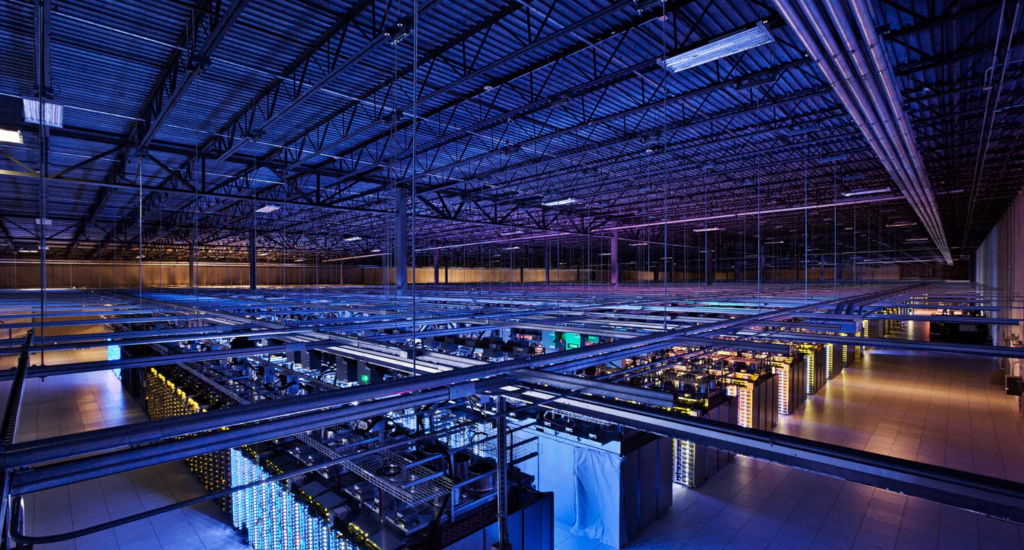
The rapid growth of artificial intelligence (AI) has sparked a global surge in demand for specialized data centers. Companies in the sector are responding by constructing large complexes dedicated to this technology. Among these advancements is the ambitious project by Scala Data Centers in Eldorado do Sul, Brazil, which is poised to host one of Latin America’s largest digital infrastructure complexes.
The Scala AI City Project

Named Scala AI City, the project in Eldorado do Sul is a significant step towards establishing Brazil as a digital powerhouse. Here are the key details provided by the State Government of Rio Grande do Sul:
- An initial investment of approximately R$ 3 billion, with a total area exceeding 7 million square meters.
- Additional investments by tenant companies are expected to reach R$ 4 billion, with potential to surpass R$ 600 billion for the total project.
- The largest state investment to date is the R$ 24 billion expansion of the CMPC cellulose factory in 2024, dwarfed by the data center project.
- The development is projected to create over 3,000 direct and indirect jobs.
- The data center’s initial IT capacity will be 54 MW, potentially scaling up to 4.75 GW.
The state government assures that the chosen location is safe from natural disasters, has abundant electricity supply, and sufficient real estate capacity. The Scala AI City is set to be interconnected with another data center in Porto Alegre and, in the future, with the Malbec submarine cable.
Environmental Concerns and Regulations
Despite the economic promises, the project has sparked environmental concerns. The municipal law tailored for the project allows for a simplified and self-declared licensing process. This has raised eyebrows, considering the lack of specific regulatory frameworks for data center environmental licensing at both state and local levels.
Data centers are known for their high consumption of energy and water, as well as generating electronic waste. The 4.75 GW energy demand by Scala’s project is greater than the output of two major Brazilian hydropower plants, Jirau and Santo Antônio, which supply millions of people, according to the Brazilian Energy Planning Company (EPE).
Professor Ricardo Soares highlighted to Repórter Brasil that such projects need to be carefully assessed for their environmental impact. “We cannot simply assume that a technological innovation, which is welcome and necessary, is devoid of impact.”
Scala Data Centers has stated that their operation will not affect local electricity supply and will use 100% renewable and certified energy. However, they have not disclosed the source of this energy. The company also claims that the data center will employ water-free cooling technologies, yet the initial water load required for the system has not been specified.
Why Eldorado do Sul?
“The dream is to build a city. The eventual plan is to have up to 4.75 GW, with consumption equivalent to that of the entire state of Rio. In the world, there is nothing like it; the largest project I am aware of is one with around 1.5 GW announced… It would require an investment from us on the order of US$ 50 billion, and it would be a project for ten, twenty years…”
– Marcos Peigo, CEO and co-founder of Scala, in an interview with the newspaper O Globo.
Scala’s choice of Eldorado do Sul is based on several factors:
- The region’s transmission infrastructure, including a substation with a 5 GW capacity, most of which is unused.
- The area’s cooler climate, which theoretically reduces the energy needed for server cooling.
However, climate change is altering this scenario, with Porto Alegre experiencing record-breaking heat and the state facing severe droughts. These conditions raise questions about the sustainability of such a massive data center in the region.
Brazil as a Data Center Destination
Brazil’s clean energy matrix, largely due to hydroelectric, solar and wind power, is making it an attractive location for data centers. Nonetheless, climate change poses a significant risk, as evidenced by recent droughts and floods.
There is currently no consensus on environmental licensing rules for data centers at the state or federal level in Brazil. The State Environmental Protection Foundation of Rio Grande do Sul (FEPAM) has suggested creating a specific “data center branch” within the legal framework for licensing.
Source: Olhar Digital
Like my content? Support me with a tip!