
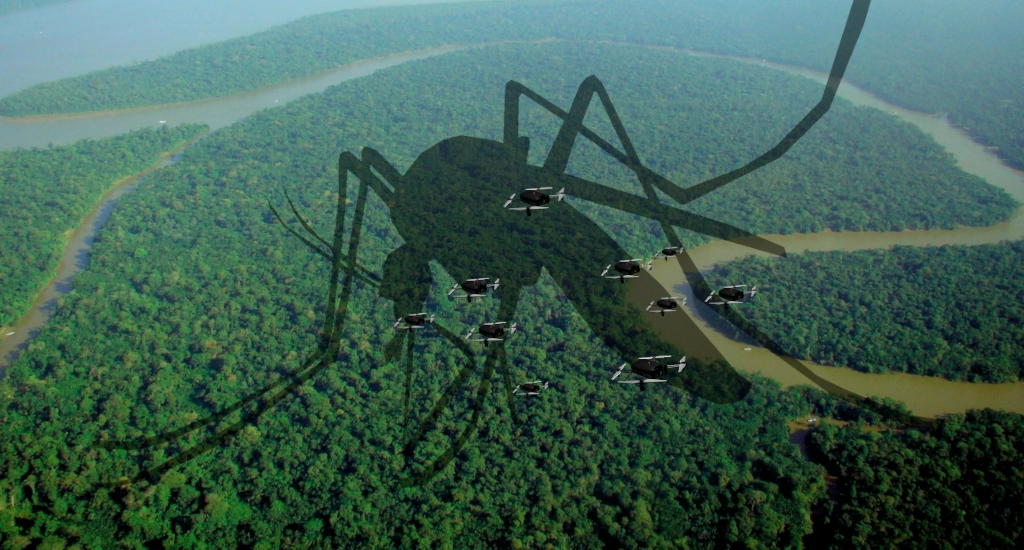
In a move that combines cutting-edge technology with biological ingenuity, Australian researchers from the World Mosquito Program (WMP) have begun employing drones to introduce a unique cargo into Fiji’s skies—mosquitoes infused with a disease-fighting bacterium. Despite the unconventional nature of this intervention, it represents a significant step forward in the battle against dengue fever.
What is Dengue
Dengue is an illness caused by a virus transmitted through the bites of infected Aedes aegypti mosquitoes. Following a bite from a mosquito carrying the virus, symptoms may manifest between 4 to 10 days. The disease varies in severity from mild to critical, with common symptoms including high fever, severe headache, pain behind the eyes, joint and muscle pains, and occasionally a rash. In severe cases, the disease can escalate to life-threatening conditions if not addressed swiftly.
Dengue is prevalent in tropical and subtropical regions around the world, particularly in areas with warm climates, high humidity, and significant rainfall, which provide optimal conditions for the breeding of Aedes mosquitoes. The places with the highest number of reported dengue cases typically include:
- Southeast Asia: Countries like Indonesia, Thailand, Vietnam, Singapore, Malaysia, and the Philippines are often heavily affected due to their climate and high population densities.
- Latin America and the Caribbean: Brazil, Mexico, Colombia, and several Caribbean islands experience frequent dengue outbreaks.
- South Asia: India, Bangladesh, and Pakistan face substantial dengue burdens.
- Western Pacific Region: Countries such as Australia have reported cases.
- Africa: While often underreported, dengue is known to occur in many African countries, particularly in regions with conditions favorable for mosquito breeding.
A Summary of the Unusual Strategy:
- Drones are now being used by scientists to strategically drop infected mosquitoes into the wild.
- This unconventional method, dubbed the Wolbachia method, releases mosquitoes carrying a bacterium known to suppress dengue fever.
- While most such initiatives have been conducted on the ground, drones were previously used for aerial releases in Brazil this year.
- The WMP team has recently executed this technique again, this time in Fiji.
- Field trials in Fiji have shown results equivalent to those obtained through traditional ground releases.
- This method could provide an alternative to physically accessing challenging environments such as thick jungles.
- The results of these trials have been documented and published in Science Robotics, illustrating the potential of this innovative tactic.
High-Flying Mosquito Deployment Targets Dengue
Until recently, the release of Wolbachia-infected mosquitoes was primarily a ground-level operation, with insects being set free on the ground. This scenario changed when drones were first used for aerial releases earlier this year in Brazil. The WMP has now replicated this strategy in Fiji, with their findings gaining attention in the pages of Science Robotics.
The WMP’s advanced drone system is capable of transporting a staggering 160,000 adult mosquitoes, which are kept sedated in a climate-controlled compartment. Upon reaching the release area, the mosquitoes are set free in groups of 150.
The field trials in Fiji have demonstrated that the aerial release method is equally effective as land-based methods, effectively eliminating the need for researchers to venture into inhospitable terrain like dense jungles.
Moreover, the WMP highlights the significant impact of mosquito releases in Indonesia, which saw a remarkable 77% decrease in dengue spread. “Aerial releases have demonstrated equivalent efficacy to land-based releases, but with markedly reduced labor and risk,” the WMP team reports. “Our trials have confirmed the practicality of employing aerial releases for expansive mosquito deployment initiatives.”
This pioneering use of drones could transform the management of mosquito-borne diseases, potentially leading to substantial reductions in dengue incidences and contributing to global health improvement.
Source: Olhar Digital, Science Robotics
Like my content? Support me with a tip!




Singapore and Malaysia are part of South East Asia.
oh thank you, just fixed it!