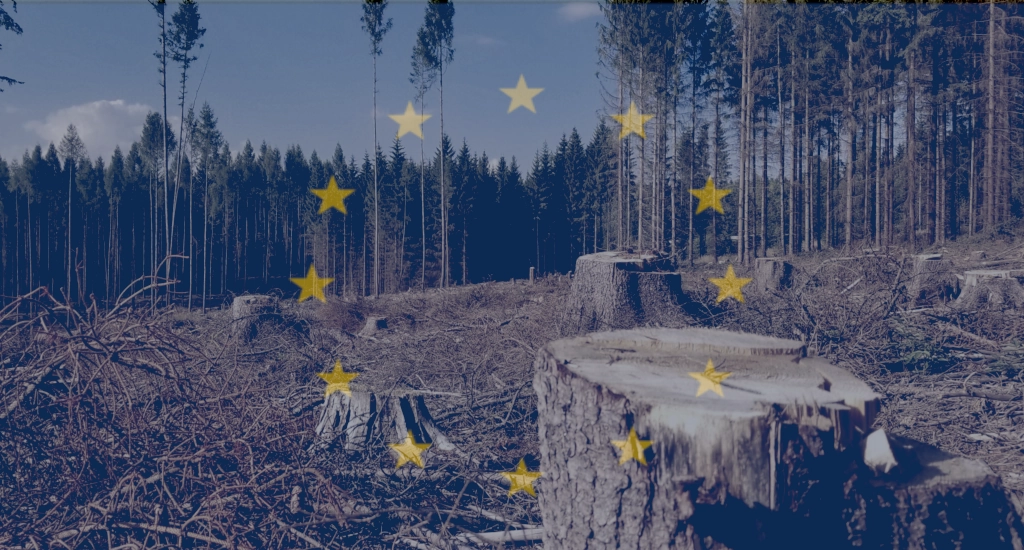
European Union member states are pushing to delay the bloc’s long-awaited anti-deforestation law by another year, according to a preliminary negotiation document obtained by Reuters. The move comes as EU governments prepare to revise the legislation before it takes effect next month — sparking frustration among environmental advocates and international trade partners.
Last month, the European Commission proposed softening parts of the law to ease compliance for small farmers and businesses, but stopped short of postponing implementation. However, a new draft dated November 10 shows that member states now plan to both accept those relaxations and delay enforcement — until December 30, 2026, for large companies, and June 30, 2027, for smaller firms.
“For many countries, the Commission’s proposal alone was not enough,” the draft reads.
Industry Pushback
The regulation — which would ban imports of key commodities like cocoa, palm oil, soy, beef, coffee, rubber, and timber unless proven deforestation-free — has been a pillar of the EU’s green agenda. Yet, industries and some national governments argue that the requirements are too “heavy and expensive to implement”.
Originally scheduled to take effect by the end of 2024, the law had already been postponed once. Even with the new flexibility, several EU countries and major trading partners, including the United States and Brazil, have expressed discontent.
Antonie Fountain, director of the VOICE Network, which advocates for reform in the cocoa sector, condemned the delay. “This decision drastically undermines the EU’s credibility,” he said, adding that it will “make doing business within the bloc harder and lead to even greater forest loss.”
“During the COP week in Brazil, this could not be more ironic,” Fountain added.
Frustration in Brazil
The European Union’s decision to once again delay its own anti-deforestation law exposes a deep inconsistency in its environmental stance. For years, the EU has been one of the loudest critics of Brazil, frequently condemning the country for not doing enough to stop Amazon deforestation and even threatening trade consequences over environmental issues. Yet, when the time comes to enforce similar standards within its own borders and supply chains, Europe hesitates — prioritizing the comfort of its industries over the urgency of protecting the world’s forests.
This double standard undermines the EU’s moral authority on climate and environmental matters. By softening rules and postponing implementation, the bloc signals that economic convenience outweighs ecological responsibility. Meanwhile, countries like Brazil — often pressured and scrutinized — are left questioning the fairness of being held to stricter expectations than the very nations imposing them.
If the EU truly wishes to lead the global fight against deforestation, it must lead by example.
Source: Forbes
Like my content? Support me with a tip!