On paper, it sounded like the salvation of Argentina’s tech economy: a staggering $25 billion investment by OpenAI to build “Stargate,” a massive AI data center in the windswept plains of Patagonia. But as the dust settles on the October announcement and the legislative elections that followed, the project is looking less like a technological revolution and more like a geopolitical house of cards built on dry land.
A Thirsty Giant in a Dry Land
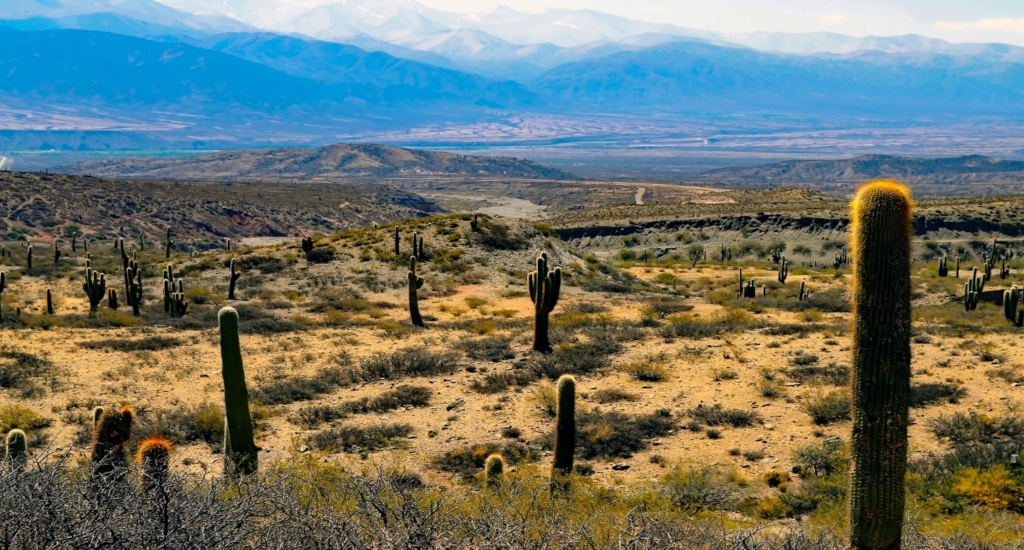
The location of the proposed data center remains the first red flag. While the exact coordinates are shrouded in secrecy, the chosen region in Patagonia is a semi-arid steppe. It is a baffling choice for a facility of this magnitude.
AI data centers are notorious for their insatiable thirst, consuming millions of gallons of water daily to cool the supercomputers training the next generation of models (like GPT-5 and beyond). Placing such a facility in a water-scarce desert defies logistical logic.
Furthermore, the energy economics are raising alarms in Buenos Aires. Argentina is plagued by chronic power outages, particularly during the scorching summer months when the grid collapses under domestic demand. Critics argue that plugging a multi-gigawatt beast like Stargate into this fragile grid will not only exacerbate blackouts but drive up electricity bills for citizens who are already struggling with the country’s eroded purchasing power.
The “Phantom” Partner: Who is Sur Energy?
Perhaps the most unsettling aspect of the deal is the entity on the other side of the table. OpenAI is not building this alone; they have partnered with Sur Energy (Energética Sur), a company that, for all intents and purposes, did not exist until the project was conceived.
Investigations, including a recent on-the-ground report by the startup analysis channel Slidebean, have revealed a trail of red flags. Slidebean’s team traveled to Argentina to find the headquarters of this multi-billion-dollar partner, only to uncover what appears to be a shell structure.
Sur Energy has no track record in infrastructure, no previous large-scale energy projects, and a corporate footprint that vanishes into a maze of holding companies. The prevailing theory among local analysts is that Sur Energy is merely a broker—a “middleman” vehicle created to facilitate a deal between OpenAI and established local players. Speculation points to Genneia and Central Puerto as the actual power suppliers, potentially utilizing the Piedra del Águila Dam (Eagle’s Rock Dam) to feed the center.
If true, why the need for a phantom intermediary? And why does a project with a $25 billion price tag promise the creation of only 160 permanent jobs? The discrepancy between the investment figure and the local economic impact suggests the capital is destined for imported hardware (Nvidia chips) rather than Argentine infrastructure or labor.
The Trump Factor: “Stargate” as Political Leverage?
The timing of the announcement—just weeks before Argentina’s critical legislative elections in October 2025—was too precise to be coincidental.
The project became a political football in a game played not just in the Casa Rosada, but in the White House. Donald Trump, whose administration has taken a renewed, aggressive interest in Latin America, explicitly stated that U.S. aid to Argentina was conditional on the victory of his preferred candidates.
“I will not aid the country if my candidate doesn’t win,” Trump reportedly threatened, casting a shadow over the democratic process. The promise of the Stargate project was dangled before the electorate as a reward for compliance—a “golden ticket” that would vanish if the political winds shifted.
A U.S. Project Offshored
Finally, tech observers are puzzled by the shifting geography of “Stargate.” Originally conceived as a joint venture between OpenAI, Oracle, and SoftBank to be built on U.S. soil to ensure national security and latency speeds, the decision to outsource a critical node of this infrastructure to Argentina is bizarre.
Is it a cost-cutting measure? A way to bypass U.S. environmental regulations regarding water and power usage? or a geopolitical favor to shore up a U.S. ally in the Southern Cone?
As 2025 comes to a close, the “Stargate” data center remains a ghost—a massive promise floating in the cloud, anchored by a phantom company in a desert that has no water to spare. For the people of Argentina, the fear is that when the servers finally turn on, the lights in their homes will go out.
Sources: Masp, Realidadsm, Bloomberglinea, Lapoliticaonline, iprofesional
Like my content? Support me with a tip!