
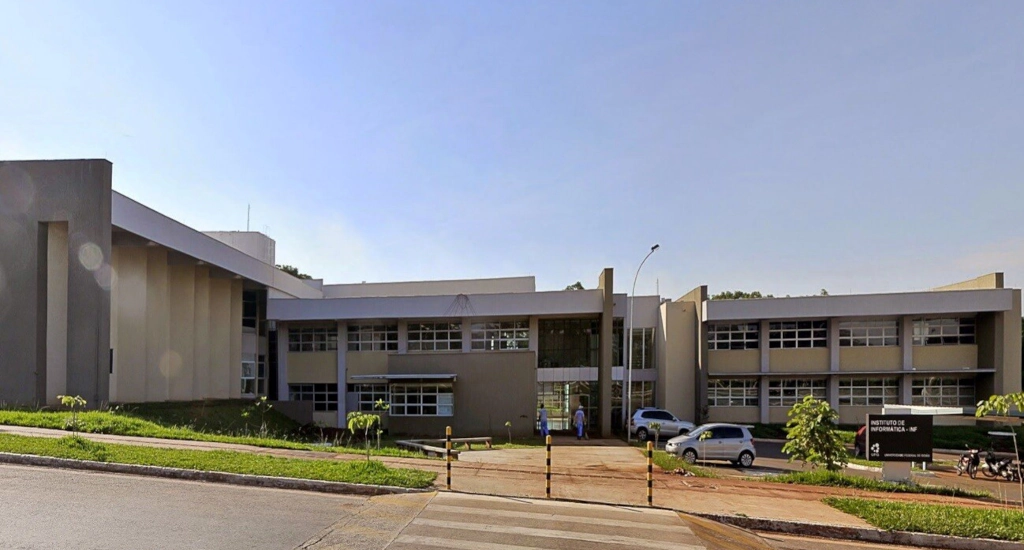
The Center for Excellence in Artificial Intelligence at the Federal University of Goiás (CEIA-UFG) has announced a groundbreaking development: it will be the first in Latin America to receive eight cutting-edge supercomputers dedicated to AI research. These supercomputers are equipped with the latest high-performance NVIDIA Blackwell B200 GPUs.
Funding for the R$ 40 million investment has been secured through strategic partnerships among the State Government of Goiás, the Foundation for Research Support of the State of Goiás (FAPEG), and the Brazilian Company for Industrial Research and Innovation (Embrapii), which operates in conjunction with the Ministry of Science, Technology, and Innovations.
As one of Brazil’s leading institutions in AI research, development, and innovation, CEIA-UFG is set to become a technological powerhouse with these supercomputers. This initiative places the State of Goiás and Brazil at the forefront of technology in the region.
“Three of the supercomputers have already arrived in Goiânia and will be temporarily housed in the state’s data center,[…]This new infrastructure positions Brazil at the forefront of AI research, equating our computational capacity to that of international centers of excellence. With this POD, we will be able to develop state-of-the-art AI models, boosting both academic research and innovation projects with industrial partners.”
– CEIA-UFG Director Telma Soares
The remaining five supercomputers are expected to arrive by the second half of 2025, with plans to install them in a new data center on the UFG campus currently under construction.
Empowering the Next Generation of AI Professionals
Adriano da Rocha Lima, the General Secretary of the Government of Goiás, expressed his belief that the supercomputers will significantly enhance the technology courses at UFG, preparing students for the job market.
“The arrival of this supercomputer will provide an even more comprehensive education to AI students, offering the market highly skilled professionals,” highlighted Adriano.
NVIDIA GTC Announcement and Industry Support
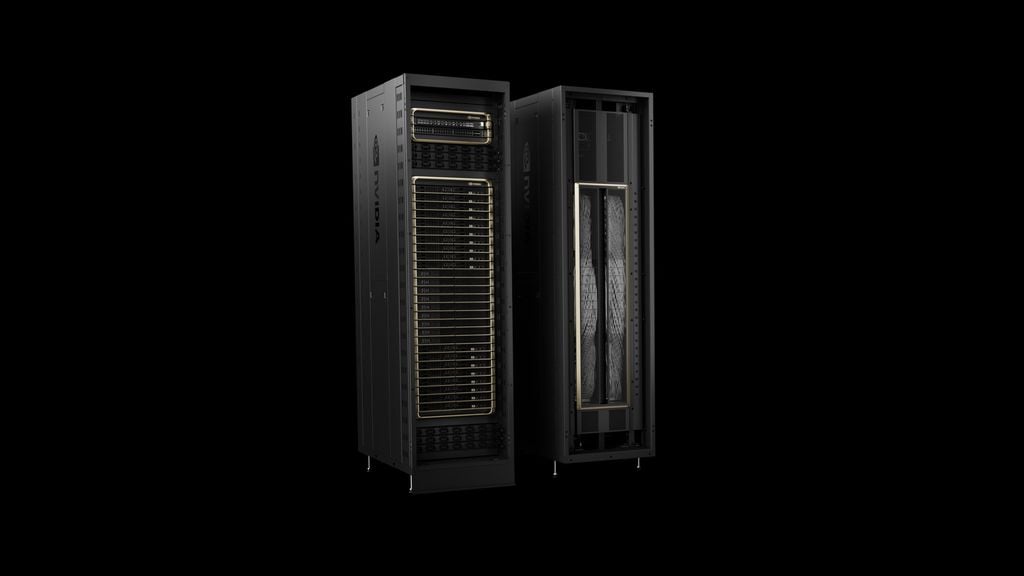
The announcement was made during the NVIDIA GTC (GPU Technology Conference), with Brazilian division executives and CEIA-UFG representatives in attendance. Marcio Aguiar, Director of the Enterprise division at NVIDIA, shared his enthusiasm for the project.
“In recent years, NVIDIA has been privileged to contribute to the development of state-of-the-art infrastructures for academic research,[…]We firmly believe that investing in AI education and research is the most significant and necessary step Brazil can take right now to become an AI superpower.”
– Marcio
Arlindo Galvão, Coordinator of the Embrapii Competence in Immersive Technologies Applied, also expressed optimism about the infrastructure’s impact.
“By setting up this infrastructure, Brazil is not only enhancing the students’ learning experience but also moving forward in a strong and competitive market,[…]This initiative helps Brazil close the technological gap with leading AI countries, strengthens our technological sovereignty, and opens doors for developing solutions tailored to the Brazilian context.”
– Arlindo
AI Projects and Energy Sector Innovation
Currently, CEIA-UFG is working on over 60 different AI projects in collaboration with various private sector companies across different fields. The new supercomputers are expected to accelerate these projects and allow students to tackle more intricate challenges, solidifying Goiás as a hub for applied research and technology transfer.
One of the notable projects set to benefit from the supercomputers’ processing power is EnergyGPT, an AI platform inspired by ChatGPT, aimed at supporting the national electricity sector.
With these advancements, the CEIA-UFG is poised to make significant contributions to both the Brazilian and the global AI landscape, showcasing the potential of Latin America in the realm of artificial intelligence.
Source: CanalTech
Like my content? Support me with a tip!