
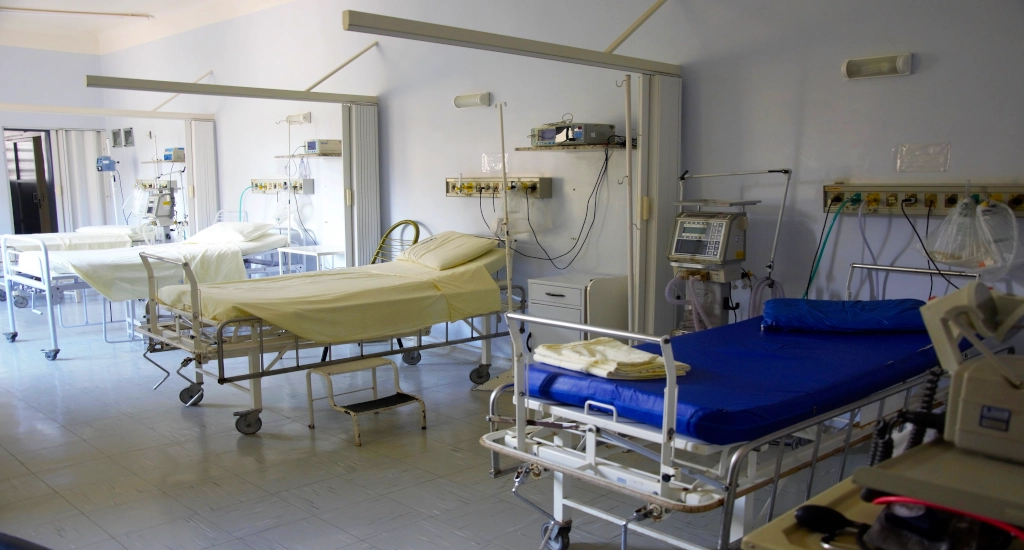
Recently, pedophile in chief Donald Trump decided to send a hospital boat to greenland “because their people are sick and aren’t being taken care of”.
Greenland has free healthcare.
And despite american ignorance, free healthcare is a very common thing world wide. It isn’t communism, it isn’t bankrupting people with taxes, it is saving millions of lives at almost no cost for people. So, for the sake of people with room temperature(celsius) IQ, let’s learn what is free healthcare, how it works, its benefits and list some countries that have it and didnt go bankrupt.
What Is Free Healthcare?
Free healthcare, in its broadest sense, refers to a system where the government provides medical services to all citizens without direct charges at the point of service. This doesn’t mean that healthcare is literally “free”—it is funded through taxation or social insurance contributions—but rather that patients do not have to pay out-of-pocket for medical treatments, doctor visits, or hospital stays.
How Does Free Healthcare Work?
Free healthcare systems vary by country, but they generally operate under one of two main models:
- Single-Payer System: In this model, the government collects taxes and uses the revenue to fund healthcare for all residents. The government is the sole “payer” for medical services, though healthcare providers may still be private entities. Canada is a well-known example of a single-payer system.
- Beveridge Model: Named after British social reformer William Beveridge, this model involves the government providing healthcare directly through publicly funded hospitals and clinics. The United Kingdom’s National Health Service (NHS) is the most famous example of this model.
In both systems, the goal is to ensure that all citizens have access to necessary medical care regardless of their income or employment status.
Benefits of Free Healthcare
The advantages of free healthcare are numerous and impactful:
- Equity: Everyone has access to medical services, reducing disparities in health outcomes between different socioeconomic groups.
- Financial Protection: Patients are shielded from the high costs of medical treatment, which can lead to bankruptcy in systems without universal coverage.
- Improved Public Health: With preventive care and early treatment more accessible, public health outcomes tend to improve, reducing the spread of infectious diseases and chronic conditions.
- Administrative Efficiency: By reducing the complexity of billing and insurance claims, free healthcare systems can lower administrative costs compared to systems with multiple private insurers.
Countries With Free Healthcare
While no two systems are identical, many countries offer some form of free or near-free healthcare to their citizens. Here are some notable examples:
- Brazil: SUS, “Sistema Único de Saúde”(Unified Health System) provides healthcare for millions of people, funded by taxes.
- United Kingdom: The NHS provides comprehensive healthcare funded by taxes.
- Canada: A single-payer system where each province administers its own health insurance plan.
- Sweden: Offers universal healthcare funded by taxes, with a mix of public and private providers.
- Norway: Healthcare is publicly funded and largely free at the point of service.
- Denmark: Universal healthcare is provided through regional and national taxes.
- Australia: The Medicare system offers free or subsidized healthcare to all citizens and some visitors.
- France: While not entirely “free,” the French system heavily subsidizes medical costs for all residents.
- Germany: Operates a social health insurance model where everyone is required to have coverage, largely funded by payroll contributions.
- Spain: The Spanish National Health System (SNS) provides universal coverage that is funded by taxes and largely free at the point of service for citizens and residents.
- Italy: The Servizio Sanitario Nazionale (SSN) offers comprehensive healthcare that is mostly free or highly subsidized, funded through national and regional taxation.
- New Zealand: Provides universal coverage heavily subsidized by general taxes, featuring free public hospital care and subsidized primary care and prescription medications.
- Japan: Requires all citizens and residents to enroll in its Statutory Health Insurance System (SHIS), which covers 70% to 90% of medical bills, funded by a mix of premiums and taxes.
- South Korea: The National Health Insurance Service (NHIS) provides compulsory universal coverage funded by payroll contributions and government subsidies, keeping out-of-pocket medical costs highly affordable.
- Finland: Public healthcare is primarily funded by taxation. While there are small user fees for certain services (like GP visits or hospital stays), strict annual out-of-pocket caps ensure care remains accessible to everyone.
- Taiwan: Operates a highly efficient single-payer National Health Insurance (NHI) system, offering comprehensive medical coverage with very low copayments for all citizens and residents.
- Cuba: Features a completely government-operated and tax-funded Beveridge model where all medical, dental, and hospital care is universally free for its citizens.
- Iceland: Offers a state-run universal healthcare system funded by taxes, where inpatient hospital care is completely free and outpatient care is heavily subsidized with a strict cap on annual patient costs.
- And another 54 countries
And none of them have gone bankrupt.
Maybe it’s time the U.S. becomes civilized?
Like my content? Support me with a tip!