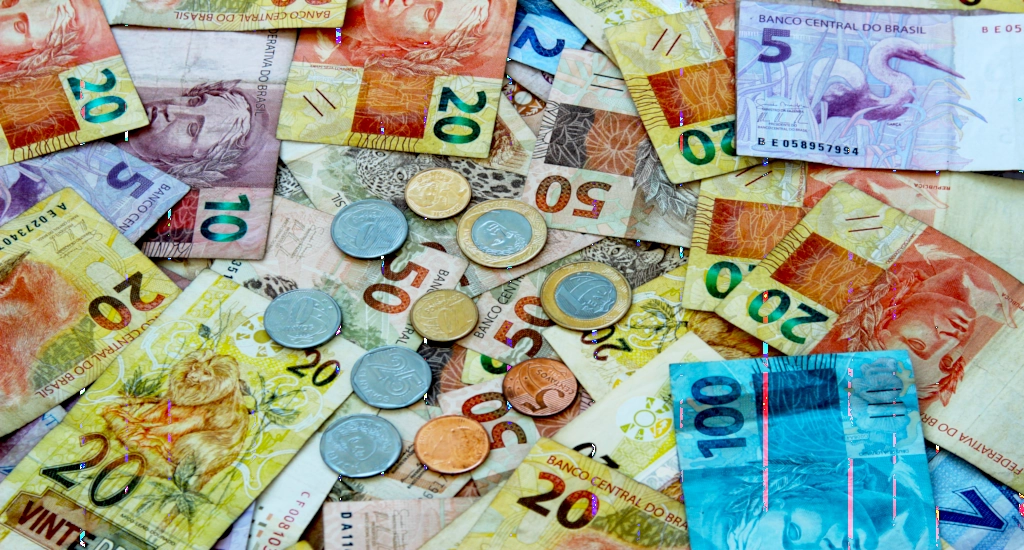
An unusual trend has taken hold in the financial markets at the start of 2026: a surge of dollar inflows into Brazil has sent the U.S. currency tumbling 3.7% against the real, reaching R$ 5.287 by last Friday (January 23).
The B3 stock exchange, a key barometer of this capital flow, has seen a net foreign inflow of R$ 12.35 billion as of Wednesday, January 21—the latest data available. That figure is nearly half (46%) of the total foreign investment recorded for all of 2025, which stood at R$ 26.87 billion. The influx has propelled the Ibovespa to a new nominal record high of 178,858 points.
On Wednesday, when the Ibovespa closed above 170,000 points for the first time, the foreign inflow increased by R$ 3.6 billion.
Analysts say the phenomenon is global and reflects a broader withdrawal of investments from the United States amid geopolitical tensions under President Donald Trump—particularly heightened by his interest in Greenland. So far this year, the dollar has lost 0.7% of its value against a basket of major currencies, according to the DXY index.
“Investors are leaving the U.S. economy in search of assets in other countries,[…]Nations involved in disputes with Trump are selling U.S. Treasuries first, fearing they could be frozen. There’s a new political paradigm.”
– Henrique Aguiar, director at Nova Futura Private
The freezing and seizure of Russian assets abroad after the Ukraine war has set a precedent, prompting other countries to fear similar actions. As a result, governments are reducing their exposure to U.S. Treasuries.
Part of this capital is finding its way to Brazil, Aguiar explains, because the country’s financial market is large enough to absorb such flows and offers attractive fundamentals. Even with the recent rally, Brazil’s price-to-earnings (P/E) ratio remains below its historical average.
“Our P/E is between 10 and 11, below the historical average of 12 to 14. Our market liquidity was low, so an inflow of R$ 8 billion already moves the needle. That amount is nothing for the U.S. market, but for us, it’s a lot,[…]If Brazil improved its public accounts, the risk perception would fall and foreign inflows could be even stronger. ‘Doing our fiscal homework’ could take the Ibovespa to 200,000 points.
– Aguiar
Latin American markets are leading global returns in 2026. Over the same period, the Dow Jones rose 2.75%, the S&P 500 gained 0.99%, and the Nasdaq added 0.83%. European markets rose about 5%, while Argentina’s S&P Merval index gained 2.77%.
Trump’s trade tariffs, introduced in 2025, had already weakened the dollar. Against the real, the dollar fell 11.19% last year, helping to keep inflation at 4.26%—the lowest since 2018 and below the central bank’s 4.5% target ceiling, despite government stimulus.
A stable dollar could lead to even lower inflation in Brazil, potentially paving the way for interest rate cuts. Markets currently expect the Selic to fall below 12.25% by year’s end.
Gold also benefited from the diversification trend, hitting a nearly 20-year high of US$ 4,979.70 per troy ounce on Friday, while silver surpassed US$ 100 per ounce for the first time. Precious metals are seen as safe havens amid uncertainty over U.S.-Europe tensions regarding Greenland, U.S. moves in Venezuela and Iran, and threats toward Colombia.
“The environment is highly uncertain,[…]It’s hard to gauge the pace of growth and inflation in the U.S. The more uncertainty there is, the harder it is to make directional bets. Investors are stuck reacting to short-term, volatile information. We saw escalation between the U.S. and Europe, then de-escalation. Everyone has little information, and that points to market instability, which affects our exchange rate.”
– Roberto Padovani, chief economist at Banco BV
Another factor supporting the real is Brazil’s high real interest rate. With inflation near 4% and the Selic at 15%, Brazil offers a real return above 10%. The appreciation of the real further boosts returns for foreign investors.
“Interest rates reinforce this trend, but the main driver is the global scenario. The dollar is weak and commodity prices are rising,[…]Commodity price gains benefit Brazilian exports, and a weaker dollar helps.”
– Padovani
Aguiar believes the positive dollar inflow could continue. “Given this new world order, this foreign investment could stay. Brazil might, surprisingly, benefit from the Trump administration.”
Source: Folha
Like my content? Support me with a tip!