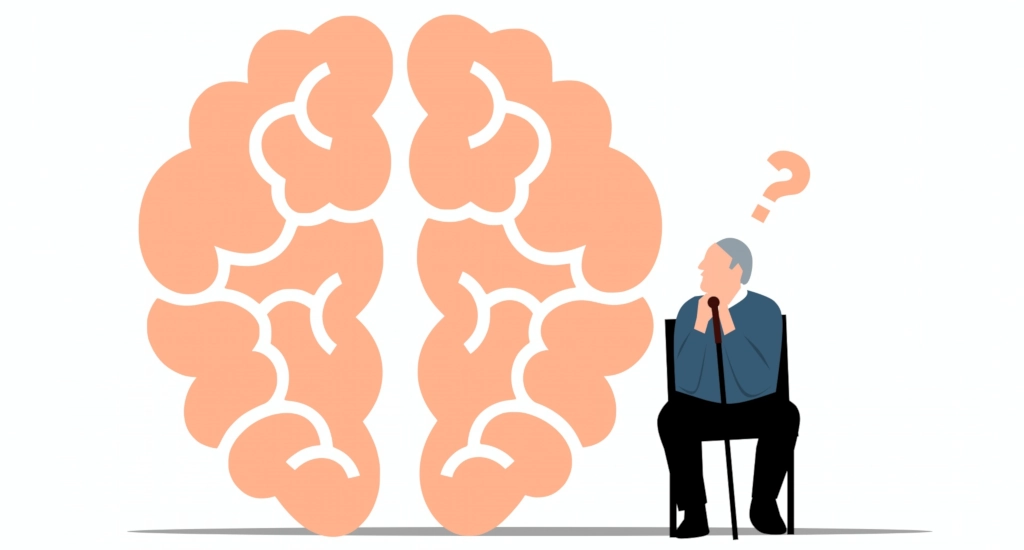
In a 4,000-word essay that was later expanded into a book, author Nicholas Carr suggested that technology, such as search engines, was indeed diminishing Americans’ capacity for deep thinking and knowledge retention.
Carr’s primary concern centered on the idea that individuals no longer felt the need to remember or learn facts when they could instantly find them online. While there is some truth to this, search engines still required users to apply critical thinking to interpret and contextualize the retrieved information.
Today, an even more profound technological shift is taking place. The rise of generative AI tools like ChatGPT means that internet users are not just outsourcing memory—they may be outsourcing the act of thinking itself.
Generative AI tools do more than just retrieve information; they create, analyze, and summarize it. This represents a significant change, as generative AI could be the first technology capable of replacing human thought and creativity.
Is ChatGPT making users less intelligent?
As a professor of information systems with over two decades of experience working with AI, Aaron French has witnessed this transformation firsthand. He believes that as people increasingly delegate cognitive tasks to AI, it is essential to examine what they are truly gaining and what they might risk losing.
Generative AI is changing how people access and process information. It replaces the need to scrutinize sources, compare perspectives, and deal with ambiguity by providing clear, concise answers in seconds. These answers are efficient, though their accuracy may vary. This has already led to substantial shifts in work and thought processes.
However, such convenience could come at a price. When individuals rely on AI to complete tasks and think for them, they may undermine their critical thinking skills, complex problem-solving abilities, and deep engagement with information. Research on this topic is limited, but passive consumption of AI-generated content could stifle intellectual curiosity, shorten attention spans, and foster a dependency that hampers long-term cognitive development.
The Dunning-Kruger effect is relevant here. It describes how less knowledgeable individuals tend to overestimate their abilities due to a lack of insight into their own ignorance. In contrast, more knowledgeable people are often less confident because they recognize the complexities they have yet to master.
This concept applies to the use of generative AI. Some users might overly depend on tools like ChatGPT to replace cognitive effort, while others use it to enhance their capabilities. In the first scenario, users may falsely believe they understand a topic because they can recite AI-generated content. This way, AI can artificially inflate one’s intelligence perception while reducing actual cognitive effort.
This creates a divide in how AI is used. Some users find themselves on the “Peak of Mount Stupid,” using AI to replace thinking and creativity. Others leverage it to enhance their existing cognitive abilities.
In essence, it’s not about whether people use generative AI, but how they use it. Without critical scrutiny, ChatGPT can lead to intellectual complacency. Users might accept outcomes without questioning assumptions, exploring alternative viewpoints, or conducting deeper analysis. On the other hand, when used as an aid, it can be a powerful tool for stimulating curiosity, generating ideas, clarifying complex topics, and fostering intellectual dialogue.
AI, Thought, and the Future of Work
The widespread adoption of generative AI, spearheaded by ChatGPT’s explosive growth to 100 million users in just two months, has placed internet users at a pivotal juncture. One path leads to intellectual decline, where they let AI do their thinking. The other path offers an opportunity to expand their intellectual capacity by collaborating with AI, harnessing its power to enhance their own.
It’s commonly stated that AI won’t replace jobs, but someone using AI might. Yet, it’s clear to French that those who use AI to replace their cognitive skills will be the most replaceable.
Those who embrace an augmented approach to AI usage will walk the path of enlightenment, working alongside AI to produce outcomes that neither could achieve alone. This is where the future of work is headed.
Conclusion: A Choice for Intelligence
The essay began by questioning whether ChatGPT could make users less intelligent. Instead, it focuses on how they can use it to become smarter. The answers to both questions lie not in the tool, but in how users choose to engage with it.
The potential of generative AI to either diminish or elevate intelligence hinges on the approach taken. People should aim to use AI to support and expand their intellectual capabilities rather than allowing it to stifle them. By treating AI responses as a starting point for thought rather than an endpoint, they can ensure they remain the intelligent force behind the technology.
Source: UOL Tilt
Like my content? Support me with a tip!