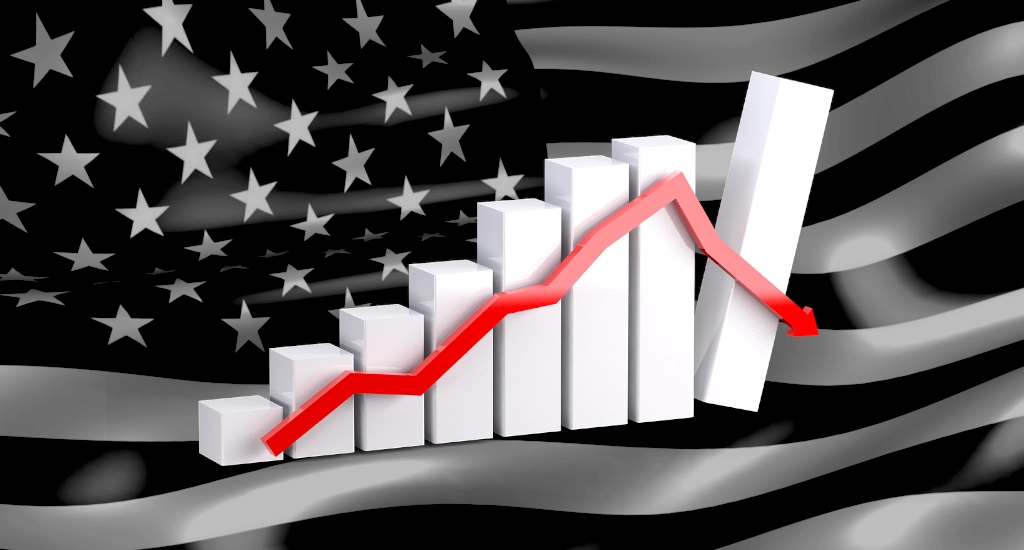
J.P. Morgan Asset Management’s chief global strategist David Kelly warned this week that the United States is “going broke,” though — he added — it is doing so at a pace that has not yet set off market panic. With the U.S. national debt hovering around $37.8 trillion and annual interest payments now exceeding $1.2 trillion, Kelly said the federal debt burden and a near-100% debt-to-GDP ratio pose a mounting risk to investors and the economy.
“America is going broke, J.P. Morgan Asset Management’s chief global strategist, David Kelly, wrote in a note this week, but no one is panicking yet because the government is going broke slowly.” That sentence, Kelly wrote in his note, captures his central point: global markets appear comfortable for now because borrowing costs remain manageable, but the arithmetic of rising debt and interest costs will eventually force difficult choices.
Kelly and other senior leaders have flagged the scale of the problem. The federal government’s interest burden — now well into the triple digits in billions — is crowding out other spending priorities and amplifying the consequences of any policy misstep or economic slowdown. JPMorgan CEO Jamie Dimon and Federal Reserve Chair Jerome Powell have both publicly expressed alarm about the trajectory of U.S. debt and interest costs.
The strategist said short-term figures provide some reason for cautious “optimism”, but carry important caveats. He pointed to recent tariff receipts — which the White House says topped $31 billion in August — and to estimates that the deficit for fiscal 2025 could fall slightly as a share of GDP. Those windfalls, however, are temporary and legally uncertain: if tariffs are overturned in the courts, the administration could be forced to replace them or even refund collections, Kelly warned.
Kelly spelled out the mechanics that worry him: with debt held by the public at roughly $30.3 trillion — close to 99.9% of GDP — even moderate nominal growth would still leave the debt-to-GDP ratio rising if deficits remain above roughly 4.5% of GDP. “The question I am asked most frequently by investors and financial advisors is, ‘When is the federal debt going to blow up in all of our faces?’ My usual answer is that, while we are going broke, we are going broke slowly,” Kelly wrote. Under his baseline assumptions, he warned, the ratio could climb from 99.9% on September 30, 2025, to 102.2% a year later.
Kelly emphasized that the outlook depends on a string of optimistic assumptions: no recession, no new major spending shocks, and continued tariff collections. Any one of those assumptions failing — a downturn, emergency spending, or a court decision that undermines tariff revenue — could push deficits higher and accelerate debt accumulation. He argued investors should factor that possibility into asset allocation decisions. “There is a danger that political choices lead to a faster deterioration in the federal finances, leading to a backup in long-term interest rates and a lower dollar,” Kelly wrote, urging diversification into alternative assets and international stocks to hedge the risk that “going broke slowly” becomes “going broke quickly.”
Policymakers face stark trade-offs. Some administration officials have touted tariffs as a revenue source that can offset tax cuts and new spending measures; critics point out tariffs raise costs for consumers and businesses and face legal challenges that could undercut their fiscal benefits. Meanwhile, the political environment — including showdowns over spending, heightened immigration enforcement and periodic agency shutdowns — complicates the prospects for steady, disciplined fiscal policymaking.
For now, markets appear to be giving the United States the benefit of the doubt: long-term Treasury yields remain low enough that the government can still borrow for decades at rates many economists consider affordable. But Kelly’s message is a warning of patience running out. If the fiscal trajectory is not arrested through either higher growth or political choices to reduce deficits, the slow-moving problem will transform into a rapid, painful shock for investors and for the broader U.S. economy.
Source: J.P. Morgan
Like my content? Support me with a tip!