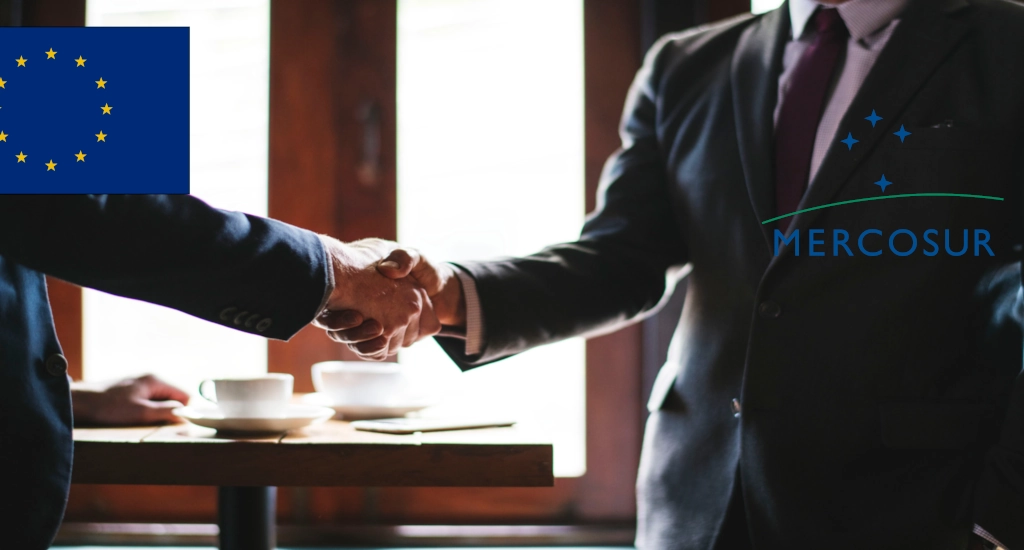
After 25 years of negotiations, Mercosur and the European Union have agreed on the world’s largest trade deal. The partnership covers over 718 million people and a combined GDP of $22 trillion. However, the agreement must clear significant hurdles before it takes effect.
What Is the Deal About?
The agreement aims to strengthen trade and investment between the South American Mercosur bloc (Brazil, Argentina, Uruguay, and Paraguay) and the European Union. It creates a massive free trade zone, reducing tariffs and promoting economic cooperation that may lead to Trillions of dollars in growth between the nations. Leaders say it represents not only an economic opportunity but also a political message supporting global collaboration over isolation.
Economics
The EU-Mercosur trade agreement is projected to bring substantial economic benefits, though estimates vary depending on assumptions about implementation. For Europe, countries like Germany and Spain stand out. Germany, for instance, exports €15.4 billion annually to Mercosur and could see further increases, supporting over 240,000 jobs. Spain expects its exports to grow by 37%, potentially boosting its GDP by 0.23% and adding more than 22,000 jobs.
For Mercosur countries, the deal offers enhanced access to one of the world’s wealthiest markets, with opportunities to increase exports in agriculture and raw materials. Mercosur accounts for 25% of the world’s agricultural exports, and the agreement could drive investments in infrastructure and mining, critical for Europe’s green energy transition.
In terms of GDP impact, the trade liberalization is expected to boost the economies of both blocs, with a significant emphasis on diversifying supply chains and reducing dependence on China. The deal aligns with strategic geopolitical objectives, fostering deeper economic ties between the two regions.
A Long Journey to Agreement
Negotiations began in 1999 and faced many obstacles. Disputes over agricultural protectionism in Europe and access to South American markets stalled progress for decades. Attempts to finalize the deal under Brazilian presidents Luiz Inácio Lula da Silva, Dilma Rousseff, and Michel Temer fell short.
In 2019, former Brazilian President Jair Bolsonaro announced a preliminary agreement, but Europe resisted due to environmental concerns, particularly Amazon deforestation. These issues delayed ratification despite the deal’s economic potential.
Opposition and Challenges
Resistance remains strong, especially in Europe. France, Ireland, the Netherlands, and Poland have expressed concerns about the impact on farmers and environmental standards. French critics, including farmers and opposition politicians, have labeled the deal “unacceptable.” Irish farmers continue to protest, fearing competition from South American agricultural exports.
Environmental groups like Greenpeace warn the agreement could lead to more Amazon deforestation, driven by increased demand for commodities. They also criticize the potential import of goods like pesticides and combustion engines, which Europe plans to phase out.
On the other hand, European leaders argue the deal includes safeguards for sustainability. Ursula von der Leyen, President of the European Commission, called it “a step forward for the Paris Agreement” and highlighted Brazil’s efforts under President Lula to protect the Amazon.
What’s Next?
The deal must undergo legal reviews and translations before formal signatures. Afterward, it faces approval processes in both the EU and Mercosur. In Europe, all 27 member states must agree, followed by approval in the European Parliament. This could take years, with countries like France vowing to block the deal unless concerns are addressed.
Why It Matters
Supporters see the agreement as a way to strengthen ties between Europe and South America, countering the growing influence of China in the region and obtaining a degree of freedom from the U.S. economy. It also demonstrates a commitment to open trade and cooperation in a world increasingly marked by nationalism and protectionism.
For Mercosur, the deal provides a chance to modernize and expand markets, though some critics argue it may disproportionately benefit large agricultural exporters. For the EU, the deal promises cheaper raw materials and certain goods, increasing competitivity of products in the global market.
Like my content? Support me with a tip!