
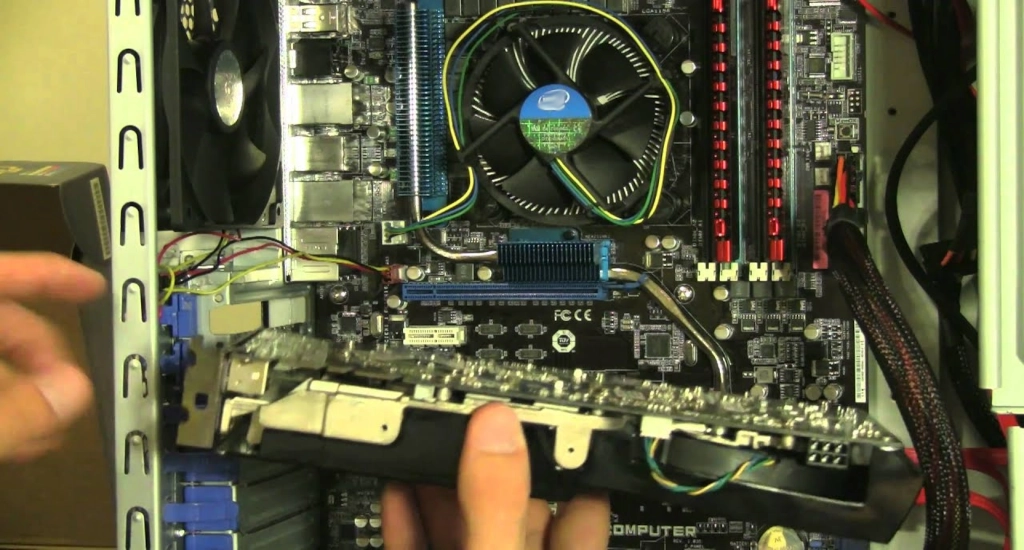
In an interesting development, Panmnesia has introduced a new protocol that enables GPUs to expand their memory using SSDs or system RAM. This innovation, built on the Compute Express Link (CXL) standard, offers a significant performance boost for AI and high-performance computing (HPC) applications and may one day also do the same for customer hardware. The protocol leverages a custom controller and an HDM decoder to efficiently manage memory allocation, reducing latency to less than 100 nanoseconds.
Enhancing GPU Performance
The introduction of this protocol is set to revolutionize the way GPUs handle memory-intensive tasks. Traditionally, GPUs have been limited by the amount of dedicated memory they possess. However, with Panmnesia’s new protocol, GPUs can now tap into additional memory resources provided by SSDs or system RAM. This expansion capability is particularly beneficial for applications that require large datasets, such as machine learning, data analysis, and complex simulations.
Technical Details
Panmnesia’s protocol is based on the CXL standard, which is designed to improve the efficiency and performance of data center systems. The protocol uses a custom controller to manage the communication between the GPU and the additional memory resources. The HDM decoder plays a crucial role in ensuring that the memory is allocated efficiently, thereby minimizing latency and maximizing performance.
Performance Benchmarks and Scalability
One of the key advantages of Panmnesia’s protocol is its cost-effectiveness. By enabling GPUs to utilize SSDs or system RAM as additional memory, organizations can scale their computing capabilities without the need for expensive hardware upgrades. This is particularly advantageous for smaller AI service providers who need to enhance their performance without incurring significant costs.
In performance benchmarks, Panmnesia’s solution has demonstrated remarkable results. It outperformed similar technologies developed by major companies like Meta and Samsung. The reduced latency, which is kept under 100 nanoseconds, is a significant improvement over existing solutions from Meta and Samsung, which could only reach 250ns. This level of performance is achieved through advanced memory management techniques and the use of high-speed communication protocols.
Future Implications
The introduction of this protocol is expected to have far-reaching implications for the technology industry. As AI and HPC applications continue to grow in complexity and demand more memory, the ability to expand GPU memory using SSDs or system RAM will become increasingly important. Panmnesia’s innovation provides a scalable and efficient solution to this challenge, paving the way for more advanced and capable computing systems.
Source: panmnesia
Like my content? Support me with a tip!