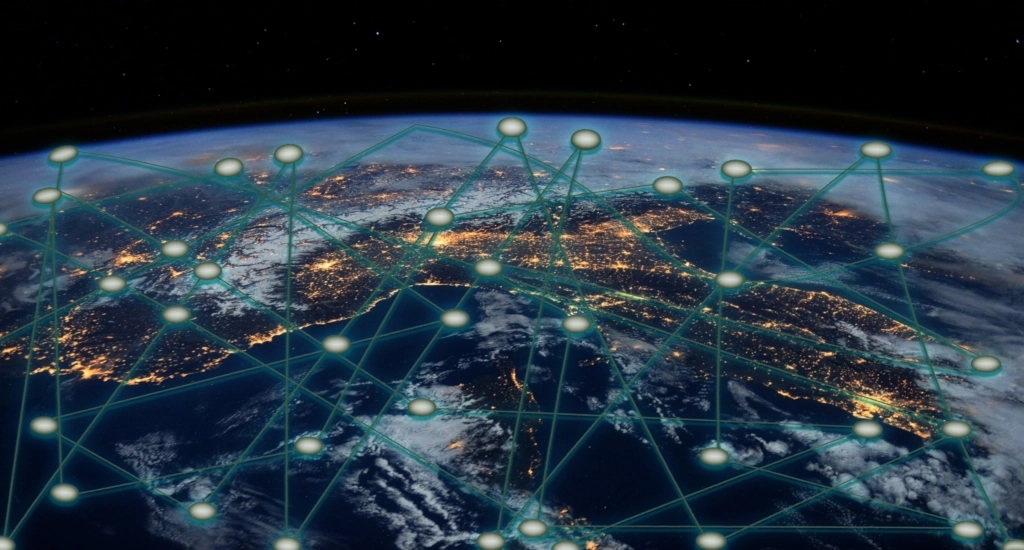
An experimental communication network based on quantum cryptography has been under development in Rio de Janeiro(Brazil) since 2021. The initiative, known as Rio Quantum, aims to connect five research institutions in the metropolitan area of Rio, leveraging cutting-edge technology to ensure secure data transmission. Currently, the network is in the testing and instrumentation phase, with an infrastructure that includes optical fiber and an aerial laser link.
The project employs concepts from quantum computing to transmit information through qubits—units capable of representing both 0 and 1 simultaneously, unlike traditional bits used in conventional digital systems. This feature enables a significantly higher level of security in data exchange, with protocols that can create virtually unbreakable cryptographic keys. These keys have applications ranging from secure banking transactions to sensitive communications for national security.
Network Infrastructure and Challenges
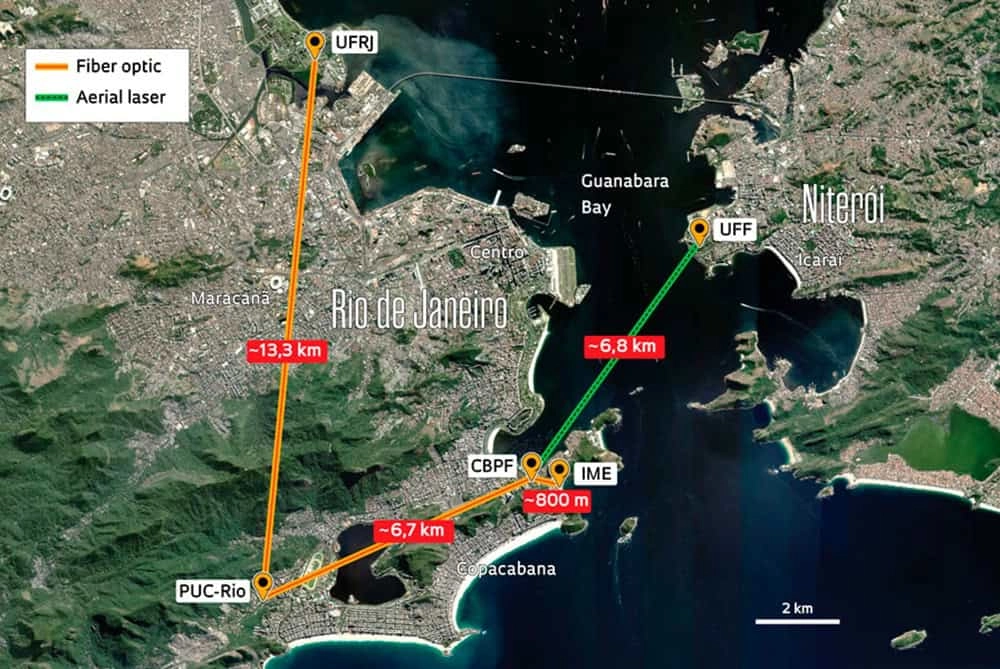
- Rio Quantum connects, via approximately 21 km of optical fiber, the Federal University of Rio de Janeiro (UFRJ), the Pontifical Catholic University of Rio de Janeiro (PUC-Rio), the Brazilian Center for Physical Research (CBPF), and soon, the Military Institute of Engineering (IME).
- In addition, an aerial link uses a green laser beam that crosses Guanabara Bay, connecting the Institute of Physics at the Fluminense Federal University (UFF) in Niterói to the CBPF in the Urca neighborhood of Rio de Janeiro.
- Although the fiber connection between PUC-Rio and CBPF operates effectively, the link between PUC-Rio and UFRJ has been experiencing weak signals, requiring adjustments.
- The connection between CBPF and IME is in the final installation phase and will also include an aerial laser link. According to Lieutenant Colonel Vítor Andrezo, a communications engineer at IME, the main challenge lies precisely in this aerial link.
- “Small vibrations, heat, fog, and rain can weaken or misalign the light beam, compromising the integrity of the transmission,” he explained.
Quantum Cryptography Operation

Unlike traditional cryptography, which directly encodes messages, quantum cryptography focuses on generating and transmitting secure, random cryptographic keys for decoding. The system uses three stations named Alice, Bob, and Charlie, which exchange quantum photons through channels that may or may not be reliable, creating a circuit to share the keys.
In the Rio Quantum network, PUC-Rio plays the role of Charlie, while UFRJ and CBPF function as Alice and Bob, respectively. Researcher Guilherme Temporão elucidates the process: “Charlie sends blank photons that Alice and Bob modify before returning them, allowing for the detection of any interception attempts.”
Investments and Project Expansion
To date, the project has received approximately R$6 million in funding from FAPESP, MCTI, CNPq, and FINEP. FINEP has allocated an additional R$23 million to CBPF for the construction of the Quantum Technologies Laboratory, scheduled to be completed in 2025. This facility will house equipment for the development of quantum chip prototypes and electronic components that function at temperatures near absolute zero, which is crucial for expanding the use of quantum technologies and establishing Brazil in the field of quantum computing and communication.
Other Quantum Networks in Brazil and Worldwide
Besides Rio Quantum, two other metropolitan quantum network projects are underway in Brazil. In Recife, a fiber-optic connection between the Federal University of Pernambuco (UFPE) and the Rural University of Pernambuco (UFRPE) has faced delays due to a lack of resources. In São Paulo, the Federal University of São Carlos (UFSCar), the Institute of Physics at USP, and the Wernher von Braun Center plan to install a three-node network within two years.
Globally, China leads with an investment of over US$15 billion in quantum technologies, operating a network covering more than 4,600 km, connecting cities like Beijing, Shanghai, and Hefei through optical fiber and utilizing satellites for quantum communication.
Similar projects in the United States and Europe are also progressing towards the development of the quantum internet, which has the potential to revolutionize global data transmission.
These advancements position Brazil alongside other nations pioneering in quantum technology, with the Rio Quantum network being a significant step towards secure communication in the digital age.
Source: Olhar Digital
Like my content? Support me with a tip!