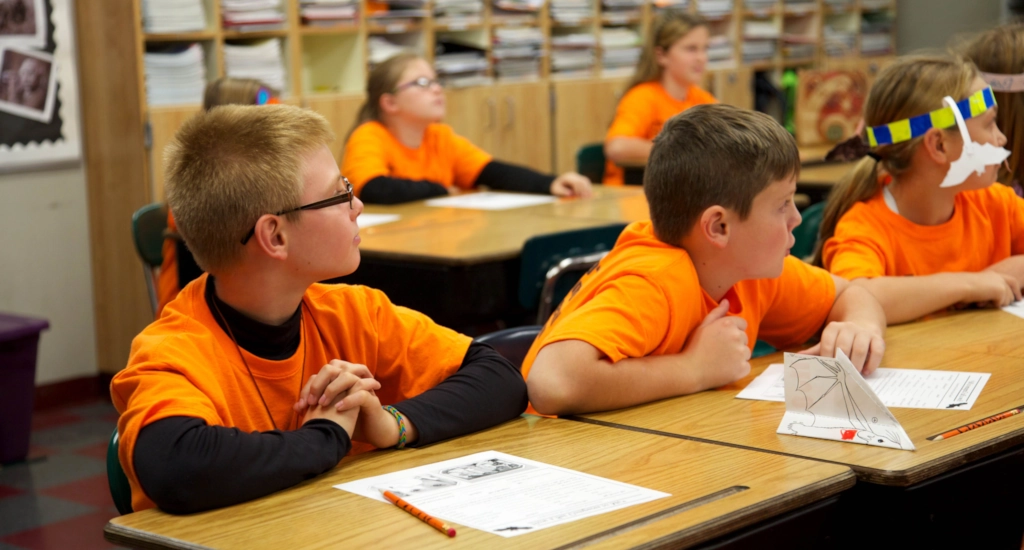
In a groundbreaking initiative, the state of Rio de Janeiro(Brazil) has seen a significant improvement in student learning outcomes following the implementation of a law that restricts the use of cellphones in schools. The law, which came into effect at the beginning of the 2024 school year, has been applied across both public and private educational institutions. Pioneering this change, Rio set a precedent that has since been adopted nationwide.
Challenging
Initially, the transition was challenging for students accustomed to the constant presence of their devices. “I had a lot of difficulty talking to people, making eye contact,” shared student Giulia Kahn Massionilo, “so any message was a boost for my confidence.” However, the adjustment period has proven to be beneficial in unexpected ways.
Stanford University, in collaboration with the Rio Municipal Education Department, conducted an unprecedented study on the impact of this policy. The research focused on over 196,000 students from the 6th to 9th grade across more than 300 schools. The findings were remarkable: students showed an average improvement of 25.7% in mathematics and 13.4% in Portuguese.
“It’s as if, in mathematics, students learned an additional bimester’s worth of material compared to what they would have achieved without the cellphone ban,”
– Renan Ferreirinha, the Municipal Secretary of Education in Rio.
More Social
The study also surveyed school directors, who reported broader benefits beyond academics. “Our biggest issue now is the neighborhood complaints,” joked Cláudia Maria Narcizo, a school director, highlighting the resurgence of active play and noise, signs of a vibrant school environment. “The kids are participating more in games. It’s the school being a school again,” she added.
Students like Alexandra Nascimento and Luis Carlos Silva noticed changes in their social interactions and hobbies. “Socialization improved. People started talking more. Before, everyone was on their phones,” said Alexandra. Luis Carlos chimed in, “I’m more into music now. I’m playing the guitar. I wasn’t very fond of it before.”
Parents have also observed the transformation. “The kids leave school sweaty, tired, and breathless. That’s what healthy play looks like. A phone doesn’t make you feel that way; it keeps you static,” remarked Roni Rei, a football technical assistant.
The research underscores that while the ban has reduced cellphone use, it hasn’t eliminated it entirely. The challenges are particularly pronounced among older students. “The use of cellphones hasn’t dropped to zero. It’s far from that, and the challenges increase with the age of the students. In high school, for example, reducing usage is very difficult, not just in Brazil, but worldwide,” explained Guilherme Lichand, a professor of Education at Stanford. “It’s crucial for the school community to unite; the more we reduce usage, the greater the learning gains we will observe.”
Students liked it
Students themselves have embraced the change, recognizing its value beyond the classroom. “Spending time without phones improves life both inside and outside school. It’s an internal and external change, and it’s almost magical,” reflected one student.
The success of Rio’s initiative serves as a beacon for schools globally, illustrating that while the path to reducing technology distractions in the classroom may be fraught with initial resistance, the educational and social rewards can be profound. The study’s results are a testament to the potential benefits of thoughtful technology management in educational settings.
Source: Globo
Like my content? Support me with a tip!