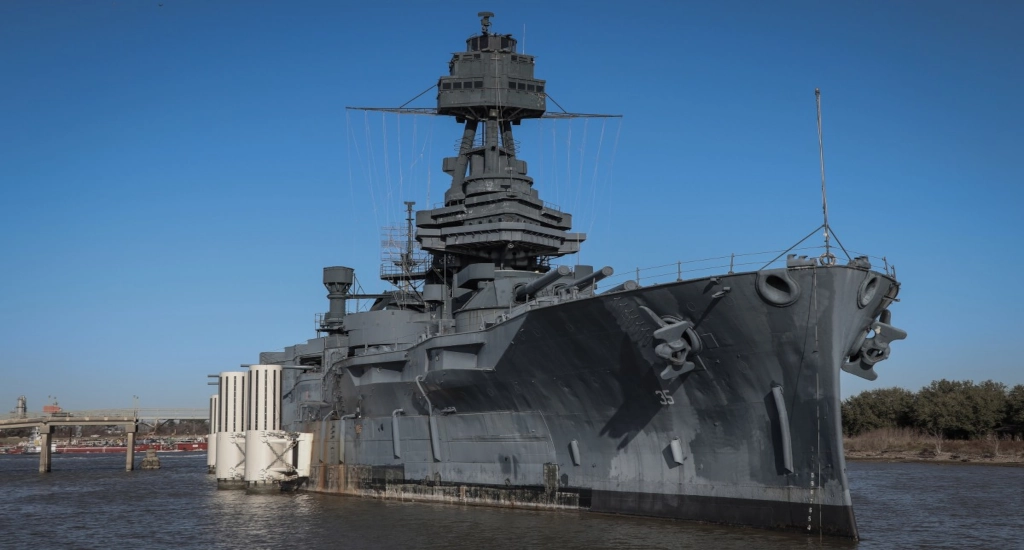
This week, tensions have escalated between the United States and Venezuela as the Trump administration dispatched three U.S. Navy warships to the Venezuelan coast. The official rationale provided by the U.S. government is to “bolster efforts against drug trafficking”. The reality is different: Oil and intervention in the region.
The uncertainty surrounding future American actions has sparked discussions among international relations experts. Gunther Rudzit, a professor of international relations at ESPM and an expert in international security, offers insights into the implications of this move and what it might signal about the Trump administration’s approach to leftist governments in Latin America.
History of invasions/coups
This isn’t the first time the U.S. invaded, backed a coup or attacked a latin american country in the past 100 years.
- Brazil (1964)
- U.S.-Backed Coup: The U.S. supported the 1964 military coup that overthrew President João Goulart, a social democrat with leftist leanings. The coup led to a long period of military dictatorship, with the U.S. providing significant military and economic aid to the new regime. The U.S. aimed to prevent the spread of communism and maintain its influence in Latin America.
- Venezuela (2017-2021)
- Failed Regime Change Attempts: The Trump administration tried to remove President Nicolás Maduro through diplomatic pressure, sanctions, and recognition of Juan Guaidó as interim president, but failed to achieve regime change. The Biden administration later reviewed these sanctions.
- Bolivia (1971)
- Support for a Coup: The U.S. backed General Hugo Banzer’s coup against President Juan José Torres to prevent a leftist shift and provided military aid to the new regime.
- Chile (1973)
- CIA-Involved Coup: The CIA played a key role in the coup against President Salvador Allende, leading to Augusto Pinochet’s military dictatorship.
- Cuba (1898-1902, 1961)
- Spanish-American War & Bay of Pigs: After the Spanish-American War, the U.S. occupied Cuba and later supported the failed Bay of Pigs Invasion to overthrow Fidel Castro.
- Dominican Republic (1961, 1965)
- Assassination & Civil War Intervention: The U.S. was involved in the assassination of Rafael Trujillo and later intervened in the civil war to prevent a leftist government, supporting Joaquín Balaguer.
- Guatemala (1954)
- CIA-Backed Coup: The U.S. orchestrated a coup against President Jacobo Árbenz to protect American business interests, particularly those of the United Fruit Company.
- Haiti (1915-1934)
- Economic Control & Occupation: The U.S. invaded Haiti to secure American financial interests, leading to a 19-year occupation marked by human rights violations and forced labor.
- Mexico (1914)
- Occupation of Veracruz: The U.S. occupied Veracruz to influence Mexican politics and protect American business interests during the Mexican Revolution.
- Nicaragua (1912-1933)
- Prolonged Occupation: The U.S. occupied Nicaragua to ensure a stable, pro-American government and protect U.S. business interests, quelling rebellions and ruling through military governance.
- Panama (1989)
- Invasion & Regime Change: The U.S. invaded Panama to overthrow Manuel Noriega, resulting in a change of government that favored American interests.
Unlikely for Now
According to Rudzit, an outright invasion by the U.S. is unlikely at this juncture due to insufficient military presence and the potential for American casualties. Nonetheless, he suggests that targeted actions such as intercepting Venezuelan vessels for drug inspections and possibly conducting strikes on ports or clandestine airstrips used by narcotraffickers are within the realm of possibility.
Rudzit posits that this maneuver represents the first concrete step by the Trump administration against leftist regimes in the region.
“Secretary of State Marco Rubio has a staunchly conservative stance against authoritarian regimes in Latin America, particularly those leaning left. Venezuela presents an opportune starting point for him to act against such governments in Latin America,”
– Rudzit explains.
The escalation against Venezuela can be attributed to two primary factors. Firstly, Trump is under pressure to deliver on his campaign promise to combat drug trafficking, and Venezuela, with its alleged ties to narcotrafficking and distant location from the U.S. border, provides a convenient target. Secondly, the influence of Marco Rubio, who has long advocated for a harder line against leftist authoritarian regimes like Venezuela and Cuba, cannot be underestimated.
Maduro’s government has withstood significant international pressure, including disputed election results last year. Rudzit acknowledges the support Maduro receives from China and Russia, which has so far deterred American intervention. However, he warns that the Trump administration might not shy away from arming the opposition or other indirect measures to destabilize the regime.
Brazil
Brazil’s position in this geopolitical chess game is complicated. The Brazilian government has neither recognized Maduro’s election nor severed diplomatic ties, reflecting an ideological connection to figures like former President Lula and his foreign affairs advisor Celso Amorim. Rudzit anticipates Brazil might offer support to the U.S. actions, albeit reluctantly given their stance on Maduro’s legitimacy.
The Brazilian military is deeply concerned about the potential for regional conflict, especially regarding the Essequibo region in Guyana, where Venezuela has been amassing troops near the border. This area is of strategic interest to the U.S. due to significant American oil investments. Rudzit suggests that the deployment of U.S. naval vessels could also serve as a deterrent to Maduro, sending a clear message to refrain from aggressive actions in Essequibo ahead of Guyana’s elections on September 1st.
In the event of Venezuela descending into civil war, the influx of refugees into neighboring countries like Brazil and Colombia could be massive, dwarfing current numbers. The Brazilian Armed Forces, particularly the Army, would likely be responsible for the initial reception and coordination of such a refugee crisis, adding to their concerns about regional stability.
Maduro’s recent actions, including the appointment of a governor for the disputed Essequibo region, mirror hybrid warfare tactics and align with the playbook used by Russia’s Putin to justify invasions. Rudzit believes the U.S. naval presence is a calculated move to prevent further escalation and protect American economic interests in Guyana.
Like my content? Support me with a tip!