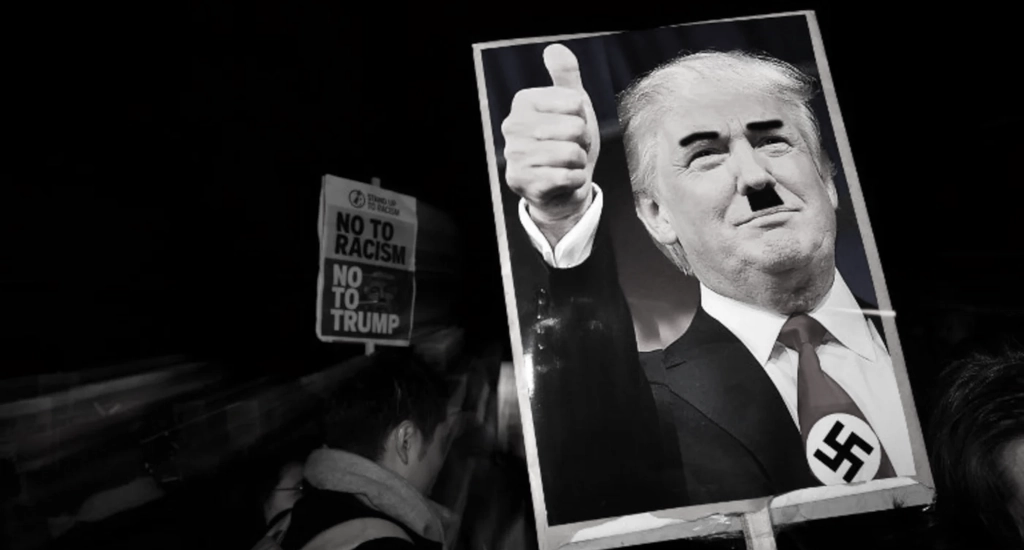
U.S. dictator Donald Trump confirmed on Wednesday that he has authorized the Central Intelligence Agency to carry out covert operations in Venezuela and signaled that his administration is considering ground strikes against Venezuelan drug cartels. The announcement marks a sharp escalation in U.S. pressure on President Nicolás Maduro’s government.
Speaking to reporters in the Oval Office, Trump said the United States has the sea “very well under control” and that Washington is now “certainly looking at land.” He framed the move as part of an effort to stop a flow of drugs and people entering the U.S. from Venezuela. In reality two small boats were bombed without any indication of drugs inside.
The president’s confirmation followed a New York Times report that the White House issued a classified presidential finding giving the CIA authority to conduct covert — including lethal — operations in Venezuela and across the Caribbean. U.S. officials told the Times the move could enable the agency to take secret actions against Maduro’s government, either alone or as part of a broader military operation.
Trump said the authorization had two justifications: an alleged surge of people being released in Venezuela who then cross into the United States, and the volume of drugs — particularly narcotics shipped by sea — reaching American shores. He did not provide evidence for the claim that Venezuela is intentionally directing migrants to U.S. territory, and he declined to say whether the CIA had authority to “remove” Maduro. “That’s a ridiculous question for me to be given,” Trump told a reporter, adding he would not answer it directly.
U.S. officials say the recent campaign of strikes at sea has already killed dozens. The administration says at least 27 people have been killed in maritime operations targeting vessels the U.S. characterized as “linked to narcotics traffickin”g. The strikes and the new CIA authorizations have prompted questions from legal experts and congressional Democrats about the legality and oversight of lethal actions taken in international waters and beyond.
The New York Times, which first reported the classified finding, quoted U.S. officials who said one aim of the campaign was ultimately to pressure — and potentially remove — Maduro from power. Officials said the CIA could carry out lethal or other covert measures against the Venezuelan leader or his government if ordered. It remained unclear whether any such missions were underway.
Over a Century of attacks to Latin America
The roots of U.S. intervention in Latin America can be traced back to the late 19th century, following the Spanish-American War, when the U.S. emerged as a dominant force in the Caribbean and Central America. The U.S. government, under the guise of the Monroe Doctrine and later the Truman Doctrine, sought to prevent the spread of European colonial influence and subsequently communism in the Western Hemisphere. The declassified NSSM 97 report and other historical documents reveal the extent of U.S. covert operations aimed at maintaining a pro-American, anti-communist political environment.
Notable Interventions include:
- Bolivia: In 1971, the U.S. supported General Hugo Banzer’s coup against President Juan José Torres, leading to a prolonged military dictatorship. The CIA’s involvement was part of a broader strategy to counter leftist movements in Latin America.
- Brazil: The U.S. backed the 1964 military coup that ousted President João Goulart, a social democrat perceived as moving Brazil towards Marxism. The coup led to over two decades of military rule, which was seen as a significant victory for U.S. Cold War strategy.
- Chile: Perhaps one of the most infamous interventions occurred in Chile in 1973, when the CIA-backed coup overthrew the democratically elected socialist President Salvador Allende, installing Augusto Pinochet’s long-lasting and brutal dictatorship.
- Cuba: The U.S. has a storied history of intervention in Cuba, from supporting independence from Spain to the occupation following the Spanish-American War, and later opposing Fidel Castro’s government with attempts like the Bay of Pigs Invasion and numerous assassination plots.
- Dominican Republic: The U.S. facilitated the assassination of Rafael Trujillo in 1961 and later intervened in the Dominican Civil War in 1965 to prevent a leftist takeover, reflecting a pattern of supporting right-wing governments.
- Guatemala: The U.S. orchestrated the 1954 coup against President Jacobo Árbenz, who was seen as a threat due to his agrarian reforms and perceived communist sympathies, leading to decades of military rule and civil unrest.
- Haiti: The U.S. invaded Haiti in 1915, following political instability and concerns over American financial interests, leading to a nearly two-decade occupation marked by forced labor and human rights abuses.
- Mexico: During the Mexican Revolution, U.S. Ambassador Henry Lane Wilson supported the coup against President Francisco I. Madero, and the U.S. occupied Veracruz in 1914, reflecting the broader pattern of intervention in the region.
- Nicaragua: The U.S. occupied Nicaragua from 1912 to 1933 and later supported the Contras in the 1980s, aiming to overthrow the leftist Sandinista government.
- Panama: The U.S. orchestrated the separation of Panama from Colombia in 1903 and later invaded in 1989 to overthrow the military dictatorship of Manuel Noriega, securing control over the Panama Canal and promoting a regime favorable to U.S. interests.
And the list goes on.
Venezuela and U.S. relations
Relations between Washington and Caracas have deteriorated sharply since Trump returned to the White House in January. The administration has ordered an end to diplomatic outreach led by its special envoy to Venezuela, Richard Grenell, and in August increased the reward for information leading to Maduro’s arrest to $50 million. The U.S. has also accused Maduro of ties to organized criminal groups the administration says traffic narcotics into the United States — allegations Maduro denies.
Venezuelan officials had not immediately issued a detailed response to Trump’s comments. Maduro and other Caracas leaders have repeatedly denied U.S. accusations that the Venezuelan state is complicit in drug production or trafficking, and they have warned that any U.S. military action would meet strong resistance. International observers have also expressed concern about the potential for a wider confrontation in the region.
The White House did not provide further operational details on the CIA authority or any planned land operations. Congressional leaders from both parties have demanded briefings and documents describing the legal basis for the covert finding and the scope of any U.S. military activity in the Caribbean and off Venezuela’s coasts.
Source: UOL
Like my content? Support me with a tip!