In a dramatic escalation of tensions in the Middle East, the United States and Israel have launched coordinated military operations against Iran, with the Israeli military striking first in a daylight raid on Tehran, followed by a broader U.S. offensive.
Israel Strikes First

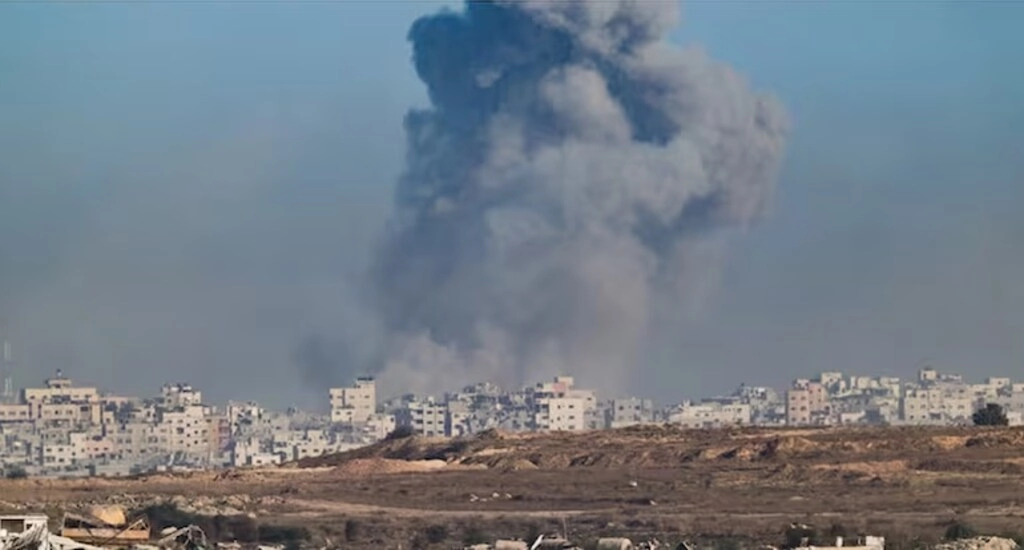
Early Saturday, witnesses in Tehran reported a massive explosion in the city’s downtown area, followed by a plume of smoke rising over the Iranian capital. The Associated Press confirmed that Israel had launched a daylight attack, though the specific target remained unclear at press time [AP]. Israeli Defense Minister Israel Katz described the operation as a measure “to remove threats,” but offered no further details [IDF statement].
The Israeli military said it had identified missiles launched from Iran toward Israel and that its defensive systems were actively intercepting them. Sirens sounded across Israel as the Home Front Command issued precautionary alerts to residents in potentially affected areas [IDF tweet].
U.S. Joins the Assault
Shortly after the Israeli strike, U.S. President Donald Trump confirmed that “major combat operations” against Iran were underway. “Our objective is to defend the American people by eliminating imminent threats from the Iranian regime,” Trump said in a video posted to his Truth Social account [White House statement].
According to Reuters, American forces attacked Iran by both air and sea, targeting several ministries in southern Tehran [Reuters]. A U.S. official confirmed the scale of the assault, which comes amid a significant U.S. military buildup in the region.
Trump claimed that Iran had ignored previous warnings and continued to pursue nuclear weapons, referencing a prior attack in June—“Operation Midnight Hammer”—that allegedly crippled Iran’s nuclear facilities at Fordow and Isfahan [Trump statement]. “We sought repeatedly to make a deal. But Iran refused,” Trump said.
Schools Bombed
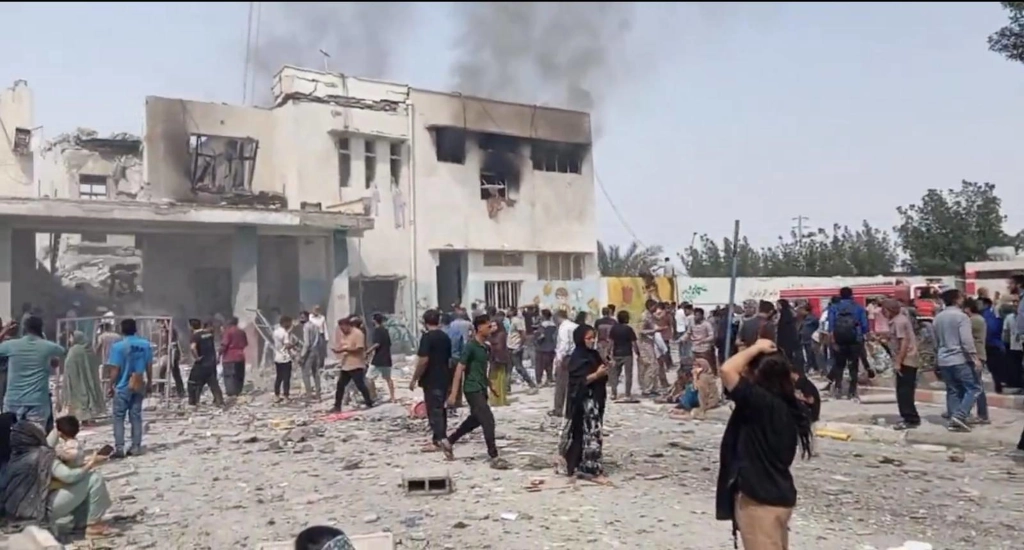
An Israeli strike hit an elementary girls’ school in Minab, southern Iran, killing 85 and injuring 63, according to Iran’s Tasnim and IRNA state media. The attack, part of a wider U.S.-Israeli bombardment, has sharply exposed the civilian toll of the offensive.
As workers clear the wreckage, the strike underscores the devastating human cost of a campaign that is rapidly fueling regional violence and eroding the veneer of “precision” warfare.
“President Trump has promised the Iranian people that aid or help is coming their way, but now we are seeing civilian casualties; that’s something that the Iranian government will stress as a case of violation of international law and an aggression against the Iranian people,”
– Al Jazeera’s reporter Mohammed Vall
U.S. and Israel Pushing for War
The coordinated strikes come as both the U.S. and Israel have been increasingly vocal in their demands for a hardline approach toward Iran. A senior Middle East diplomat told MS Now, “Yet again, when negotiations get close to success … Israel has intervened to preempt diplomacy” [MS Now].
The Pentagon has remained largely silent, with a duty press officer acknowledging requests for comment but offering no further clarification [Pentagon statement].
Regional and Global Fallout
Airlines have begun rerouting flights around the region, with major carriers like Lufthansa and KLM suspending or canceling flights to and from Tel Aviv, Beirut, and Oman [Reuters]. Oil prices have surged to six-month highs as markets react to the escalating conflict and the potential for a supply shock through the Strait of Hormuz, a critical chokepoint for global energy supplies [Bloomberg].
Iran, a founding member of OPEC, has warned the UN that it would “respond decisively” to any military aggression [UN letter]. Last June, after U.S. strikes on its nuclear facilities, Iran retaliated with a missile attack on an American air base in Qatar, causing minor damage but no casualties.
A Pattern of Aggression
The latest escalation underscores a troubling pattern: Israel and the U.S. have repeatedly chosen military action over diplomacy, even as Iran has shown willingness to negotiate on its nuclear program—though not on its missile development [State Department statement]. With both Washington and Tel Aviv pushing for a more aggressive posture, the region now teeters on the brink of a wider conflict.
As one diplomat put it, “Every time we get close to a deal, someone pulls the trigger.” Today, that trigger was pulled first by Israel, with the U.S. following close behind.
Source: CNBC
Like my content? Support me with a tip!