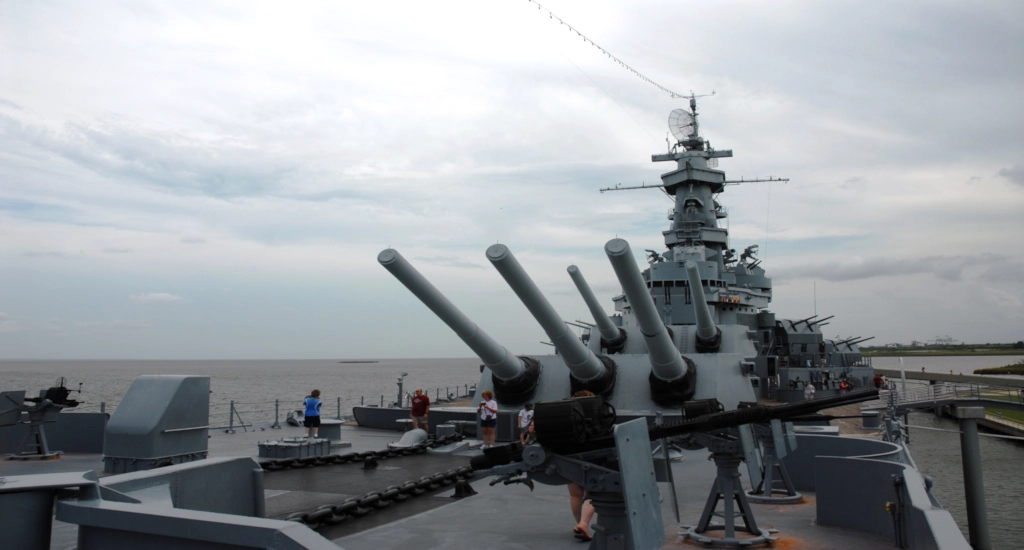
As tensions escalate in the South Caribbean Sea, the United States has once again flexed its naval muscle by dispatching an additional warship and a fast-attack submarine to the vicinity of Venezuela’s coast, according to unverified sources within the Pentagon who spoke to Reuters. The USS Lake Erie, a guided-missile cruiser, and the USS Newport News, a nuclear-powered fast-attack submarine, are set to join the growing American armada in the region early next week.
The Pentagon, maintaining a veil of secrecy, refuses to disclose the specific mission of these latest deployments. Instead, they vaguely cite the need to counter “narcoterrorist organizations” that pose a threat to U.S. national security. However, critics argue that this narrative masks a more insidious agenda: securing Venezuela’s vast oil reserves.
The U.S. government, under President Donald Trump, has made no secret of its disdain for Nicolás Maduro, labeling him an illegitimate leader, a fugitive, and a narcoterrorist kingpin. This harsh rhetoric is coupled with a $50 million bounty on Maduro’s head, a move that has further inflamed the already volatile situation. The U.S. claims that Maduro leads the notorious Cartel de los Soles, a group recently branded as a foreign terrorist organization by the American government.
Pentagon’s Justification: The War on Drugs
The recent military build-up is not an isolated incident. Last week, the U.S. relocated six warships, including destroyers equipped with the Aegis combat system, and three amphibious assault vessels designed to deploy ground forces, along with P-8 Poseidon spy planes and at least one additional submarine. This deployment, involving roughly 4,000 sailors and marines, ostensibly aims to “combat drug cartels” but is seen by many as a thinly veiled attempt to exert pressure on the Maduro regime.
Maduro’s response to this naval show of force was swift and predictable. He declared the mobilization of 4.5 million militiamen to counter what he termed as “U.S. threats.” Yet, the Venezuelan military’s capability to respond to such a show of force is questionable. The International Institute for Strategic Studies (IISS) has noted the Venezuelan armed forces suffer from “restricted capabilities” and “readiness issues” due to international sanctions, economic turmoil, and regional isolation. This has severely hampered their ability to procure new military technology and maintain existing systems.
The U.S.’s fixation on the Cartel de los Soles appears to be gaining traction among some South American countries. Allies like Ecuador and Paraguay, both led by right-wing administrations opposing the chavismo ideology, have echoed Trump’s sentiments and designated the cartel as a terrorist organization. More recently, Guyana has followed suit, a country embroiled in a territorial dispute with Venezuela over the Essequibo region, rich in oil.
A Game of Oil and Influence
Nonetheless, the timing and scale of these military maneuvers raise eyebrows. They coincide with Venezuela’s struggle to maintain its oil production amidst crippling sanctions and internal strife. The U.S., historically a major importer of Venezuelan oil, has a vested interest in the country’s hydrocarbon sector. Critics argue that the so-called war on drugs is merely a pretext for Washington to reassert its influence over Venezuela’s oil wealth.
In conclusion, while the U.S. government justifies its military presence near Venezuela with concerns over narcoterrorism, the underlying motive appears to be far more economic than it is altruistic. The move is seen by many as an aggressive overture to control access to Venezuela’s oil, a resource that has become increasingly critical amidst global energy tensions. Whether this strategy will yield the desired results or further destabilize the region remains to be seen.
Source: Globo
Like my content? Support me with a tip!