
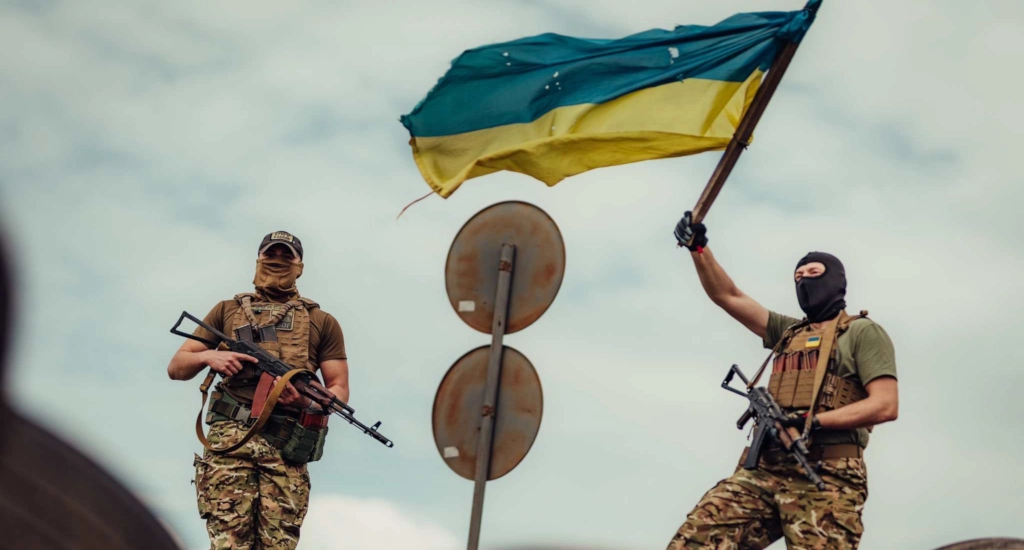
Ukraine Strikes Deep into Russian Territory
Ukraine has claimed a successful drone strike on the Borisoglebsk air base in Russia’s Voronezh region, targeting Su‑34, Su‑35S, and Su‑30SM jets and glide bombs—a major blow to Russia’s air capabilities.
Russia launched another massive drone offensive—322 unmanned drones overnight—with Ukraine intercepting nearly half, though some still caused civilian casualties (nypost.com).
Economic Stress in Russia
Russia’s wartime economy is showing a marked slowdown: GDP growth dropped from 4.5% (end of 2024) to just 1.4% in Q1 2025, manufacturing output is down, and defense spending is straining public finances (wsj.com).
High Casualties & Slow Advances
Russia’s battlefield momentum is sputtering. Since January 2024, it has gained less than 1% additional territory, battled logistical woes, and is projected to reach a staggering 1 million casualties by summer 2025 (csis.org).
Why This Suggests Russia Might Finally Be Breaking
- Degraded Air Power
Repeated Ukrainian strikes on strategic airbases are putting Russia’s air fleet at risk—limiting its ability to dominate both skies and ground operations. - Economic Pressure
Russia’s faltering economy, high debt, and reliance on weapon exports leave little room for sustained military investment or social stability at home. Situation is so bad, Russia’s central bank issued an economic alert (reuters.com). - Attrition and Morale
With casualty counts nearing a million, Russia’s manpower and morale are eroding. Ukraine, by contrast, is innovating with drones and partisans disrupting supply lines (en.wikipedia.org, nypost.com). - International Support for Ukraine
While some U.S. support—especially Patriot missile shipments—has been paused, talks of joint arms production with Western allies are picking up. Germany may also supply Patriots to Ukraine (ft.com, reuters.com). - Coalition Backing and Strategic Planning
A “coalition of the willing” led by the UK and France remains poised to support Ukraine’s long-term security and deterrence capacity (en.wikipedia.org).
For over 41 months, the world has watched a titanic struggle in Eastern Europe. But recent shifts—from successful Ukrainian strikes on Russian airfields to mounting economic strain in Moscow—indicate that Russia might finally be losing its grip.
Russia’s Strategic Overreach
Once viewed as unstoppable, Russia’s war machine now shows visible cracks. Its slow territorial gains, staggering casualty rate, and raided defense coffers are signs of strategic fatigue. Its air force, once a tool of dominance, is no longer a guarantee—and Ukrainian sabotage deep behind enemy lines is proving effective.
Ukraine’s Ascent
By harnessing asymmetric warfare—drones, targeted strikes, partisan sabotage—Ukraine is reshaping the terms of engagement. Western aid, while uneven, is orienting toward not just defense, but empowerment: the idea of joint weapons production hints at a future where Ukraine isn’t just defending—but building its own arsenal.
Turning Point or Temporary Lull?
The obstacles are real: manpower shortages, halted U.S. missiles, and renewed Russian offensives in places like Pokrovsk and Sumy. But Russia faces deeper issues: economic headaches, dwindling public support, and an attrition rate that even exceeds WWII-era benchmarks.
Yes, Russia is visibly weakening. But for Ukraine to move from survival to victory, continuity in Western military support—especially air defense—and a unified strategic coalition are essential. The battle ahead isn’t just on the ground; it’s about sustaining a political will—that’s Ukraine’s true path to eventual success.
Like my content? Support me with a tip!