
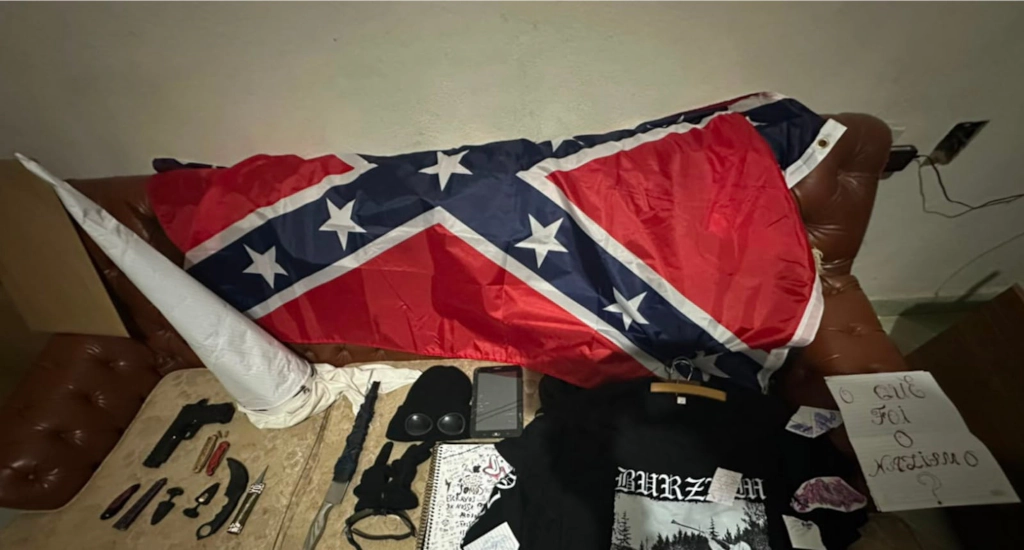
The Civil Police of the Federal District (PCDF), in partnership with the Ministry of Justice and Public Security, launched Operation “Rede Interrompida” (Interrupted Network) on Tuesday to dismantle a suspected cell that was allegedly plotting attacks against authorities and electoral infrastructure ahead of this year’s elections.
Investigators say the group discussed installing explosives in a building slated to host a presidential debate, among other planned actions targeting public institutions in Brasília, including the Supreme Court (STF) and the Planalto Palace.
Cyber-Lab Breakthrough
The probe began after the CiberLab (Cybernetic Operations Laboratory), a unit of the National Secretariat of Public Security, compiled intelligence indicating that members of the network were coordinating via encrypted messaging apps. Intercepted communications revealed discussions about invading buildings, selecting targets, forming tactical teams, and recruiting members across multiple states.
According to officials who spoke at a press conference Tuesday, the suspects shared architectural blueprints, maps, and three-dimensional models of buildings in central Brasília, alongside manuals on fabricating explosive devices.
“These individuals identified themselves as being ‘against the system’ and operated almost exclusively through online networks,” said a PCDF representative. “Much of the material they used was publicly available — some buildings underwent renovations whose plans were published online, creating vulnerabilities we’re now addressing.”
Raids Across Five States
Eight search-and-seizure warrants were executed in five states: São Paulo, Pernambuco, Paraná, Rio Grande do Sul, and Santa Catarina. The operation involved coordination with the Civil Police of each state.
Authorities seized firearms, knives, and other bladed weapons. Among the most concerning items recovered were materials containing Nazi symbols and references to other racist extremist organizations, including a hat resembling those historically associated with the Ku Klux Klan.
Suspects and Modus Operandi
The eight individuals under investigation are believed to have known each other only through the internet, primarily using the Telegram messaging platform. Their ages range from 19 to 31. According to police, the group planned to mobilize in Brasília during October, coinciding with the electoral period.
An inquiry has been opened to investigate possible crimes including criminal association, incitement to crime, apology for crime or criminals, and offenses under Brazil’s anti-racism legislation. Maurílio Coelho, PCDF intelligence coordinator, emphasized that, for now, the case has not been classified under Brazil’s Anti-Terrorism Law.
“We’re still determining the stage at which their plans were and whether any actions were actually carried out,” Coelho said. “We’re also reviewing how they accessed public information and whether websites hosting sensitive documents should be taken down.”
Broader Crackdown on Online Extremism
In a related development, authorities announced a separate investigation into another digital network accused of using Telegram and Discord to disseminate hate speech, recruit members, and commit crimes against women, children, and adolescents.
Officials disclosed that a 13-year-old girl died by suicide under the direction of criminals during a livestream that remained online for 45 minutes. They attributed the tragedy to “systemic failures” by the platforms, which allegedly failed to identify the minor or suspend the broadcast. In another incident, authorities said they were able to prevent a second death.
The ongoing investigations underscore growing concerns about the use of encrypted platforms to organize extremist activities and target vulnerable populations in Brazil’s digital landscape ahead of a pivotal election year.
 Buy me a Ko-fi
Support this blog ❤️