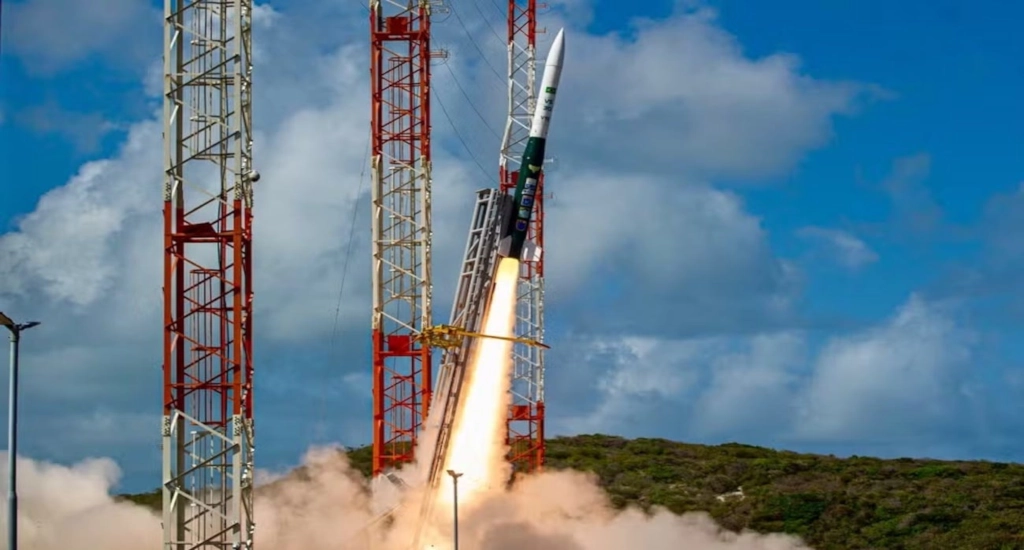
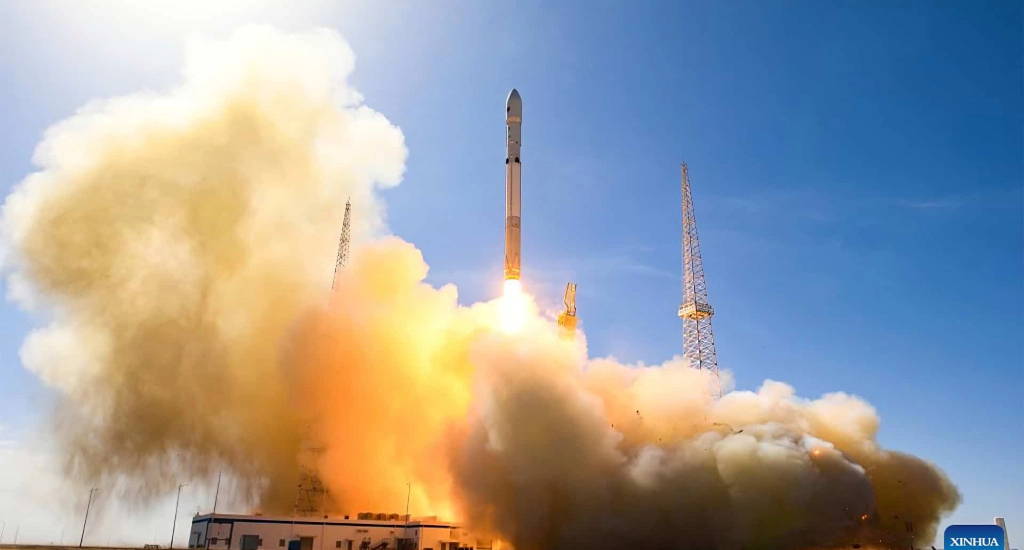
On Monday (1st), China successfully conducted the maiden flight of the Long March 12B rocket from the Jiuquan Satellite Launch Center in the Gobi Desert. The next-generation, partially reusable launch vehicle is specifically designed to support the country’s growing low Earth orbit (LEO) ambitions.
Notably, the launch took place entirely without prior notice. Authorities did not issue the standard airspace or maritime closure alerts, which are typically standard protocol to ensure traffic safety during space launches.
Advancing the “Thousand Sails” Megaconstellation
The primary objective of the mission was to deploy two internet satellites for the Qianfan (translated as “Thousand Sails”) constellation.
- The Qianfan Project: This initiative is China’s strategic answer to SpaceX’s Starlink. It aims to establish a massive network of thousands of LEO satellites to provide global broadband connectivity.
- Mission Success: The China Aerospace Science and Technology Corporation (CASC) officially confirmed that the payloads were successfully inserted into low Earth orbit.
Falcon 9 Similarities and Reusability Plans
The Long March 12B shares striking design similarities with SpaceX’s workhorse, the Falcon 9.
Key Specifications:
- Height: Approximately 70 meters
- Structure: Two-stage launch vehicle
- Propulsion: The first stage is powered by nine engines utilizing a kerosene and liquid oxygen (kerolox) propellant mix.
Despite the vehicle’s reusable design, no landing attempt was made during this inaugural flight. According to CASC, first-stage recovery and reuse will be tested on a future, yet-to-be-scheduled mission.
A Growing Ecosystem of Reusable Rockets
This surprise launch underscores a broader, accelerated push within the Chinese aerospace sector to master reusable rocket technology, a critical step toward reducing launch costs and boosting international competitiveness.
Recent milestones and upcoming projects include:
- Long March 12A: Attempted a first-stage landing late last year. While the payload successfully reached orbit, the landing attempt was unsuccessful.
- Commercial Ventures: China’s private space sector is aggressively pursuing reusability. Companies like Landspace and Space Pioneer are already conducting tests with partially reusable hardware.
- Rockets in Development: Several other reusable vehicles are currently in the pipeline, including Kinetica-2 (CAS Space), Pallas-1 (Galactic Energy), and Nebula 1 (Deep Blue Aerospace).
These combined efforts by state-owned enterprises and private startups highlight a unified national strategy to secure frequent, cost-effective access to space.
Source: Olhar Digital,