The open-source gaming community has a new milestone to celebrate this weekend: DXVK-NVAPI 0.9.3 is now available, delivering a suite of meaningful improvements for Linux gamers running Windows titles through Valve’s Steam Play with Proton.
Developed as an implementation of NVIDIA’s NVAPI for the Linux ecosystem, DXVK-NVAPI plays a crucial role in bridging proprietary NVIDIA technologies with compatibility layers like Proton and Wine. The new release, which is already drawing attention from the Linux gaming community, brings several headline features that enhance ray tracing performance, reduce input latency, and expand hardware compatibility.
Opacity Micromaps Accelerate Ray Tracing
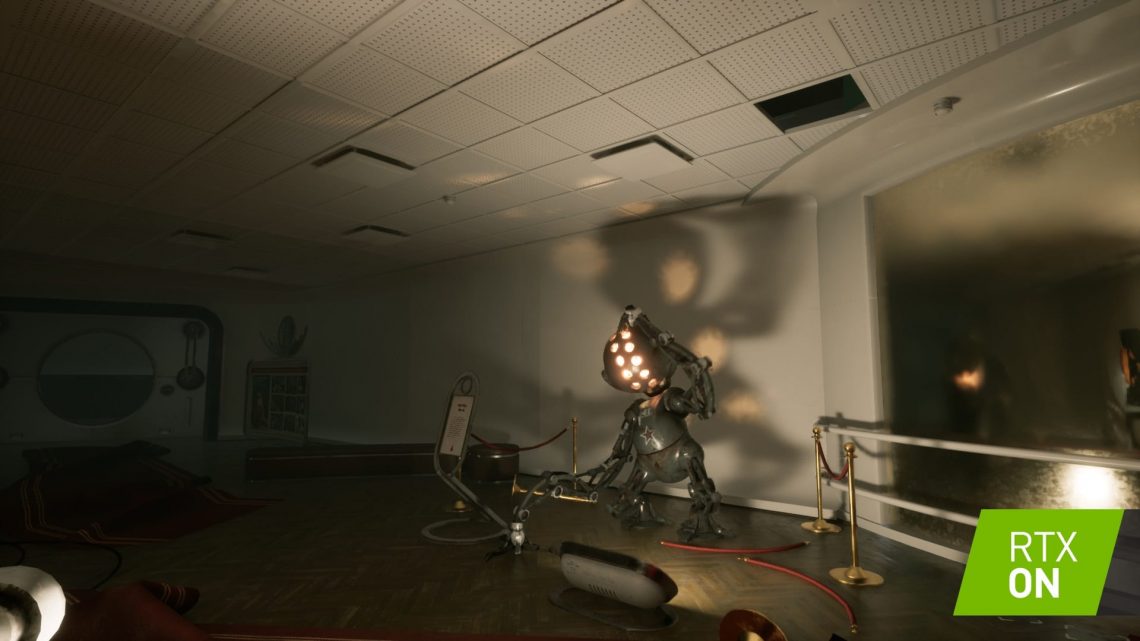
The most notable addition in 0.9.3 is support for Opacity Micromaps (OMM) — a feature introduced as part of Microsoft’s DirectX Raytracing (DXR 1.2+) specification. OMM optimizes ray-tracing workloads by efficiently handling alpha-tested and semi-transparent geometry, such as foliage, fences, and particle effects, which are traditionally expensive to trace.
To leverage OMM, users need the NVIDIA R615 Linux driver or newer paired with VKD3D-Proton 3.1 or later. With this stack, games that implement DXR with OMM can see significant performance gains in ray-traced scenes without sacrificing visual fidelity.
Reflex Gets a Vulkan-native Overhaul
DXVK-NVAPI 0.9.3 also introduces an alternative NVIDIA Reflex implementation for Vulkan titles, built on the VK_NV_low_latency revision 2 extension. This change is substantial: it eliminates the need for the separate DXVK-NVAPI Vulkan layer, simplifying the stack and reducing potential points of failure. Reflex — NVIDIA’s technology for reducing system latency in competitive games — now integrates more cleanly for Vulkan-based titles on Linux, provided users are on the R615 driver or newer.
Expanded Driver Settings and Better VRAM Reporting
The update adds support for several new driver settings exposed in recent NVIDIA driver headers:
- From NVAPI R610:
NGX_DLSS_NR_OVERRIDE,NGX_DLSS_NR_OVERRIDE_RENDER_PRESET_SELECTION, andNGX_DLSS_NR_SL_OVERRIDE - From NVAPI R615:
SL_DLSS_OVERRIDE
These settings give advanced users finer control over DLSS noise reduction and related rendering presets.
Additionally, DXVK-NVAPI now reports available and free VRAM more accurately, aligning its behavior with the Windows version of NVAPI. This change helps games and tools make better memory allocation decisions, reducing crashes and improving stability.
Stability Fixes, Workarounds, and ARM64 Support
The 0.9.3 changelog also includes several stability improvements:
- Crash fixes: A race condition during initialization — which previously caused crashes in Elite Dangerous when using the EDHM mod — has been resolved. The internal NVAPI wrapper storage was refactored to prevent crashes with modded titles.
- Display info support: Sound Voltex can now retrieve output refresh rate information via the implemented
NvAPI_DISP_GetDisplayConfigfunction. - Legacy workaround removed: The Pascal spoofing hack for War Thunder has been dropped, as DLSS with D3D11 now works natively in that title.
- RTX Path Tracing Sample: A workaround enables NVIDIA’s RTX Path Tracing sample to use NVAPI shader extensions without requiring the
DXVK_NVAPI_D3D12_NV_SHADER_EXTN=1environment variable. - ARM64 support: The project now ships with an ARM64 build, opening the door for better performance on newer ARM-based Linux gaming devices and Steam Decks running native ARM Proton builds.
What This Means for Linux Gamers
With DXVK-NVAPI 0.9.3, Valve’s Proton users on NVIDIA hardware gain tangible benefits: smoother ray-traced graphics, lower input latency in competitive titles, and more reliable memory management. The removal of legacy workarounds and the inclusion of ARM64 builds signal the project’s maturation as Linux gaming continues to close the gap with Windows.
To take full advantage of the new features, users should ensure they’re running NVIDIA Linux driver R615 or newer and VKD3D-Proton 3.1 or later. The updated DXVK-NVAPI release is available now through the project’s official distribution channels.
Source: Phoronix
 Buy me a Ko-fi
Support this blog ❤️