
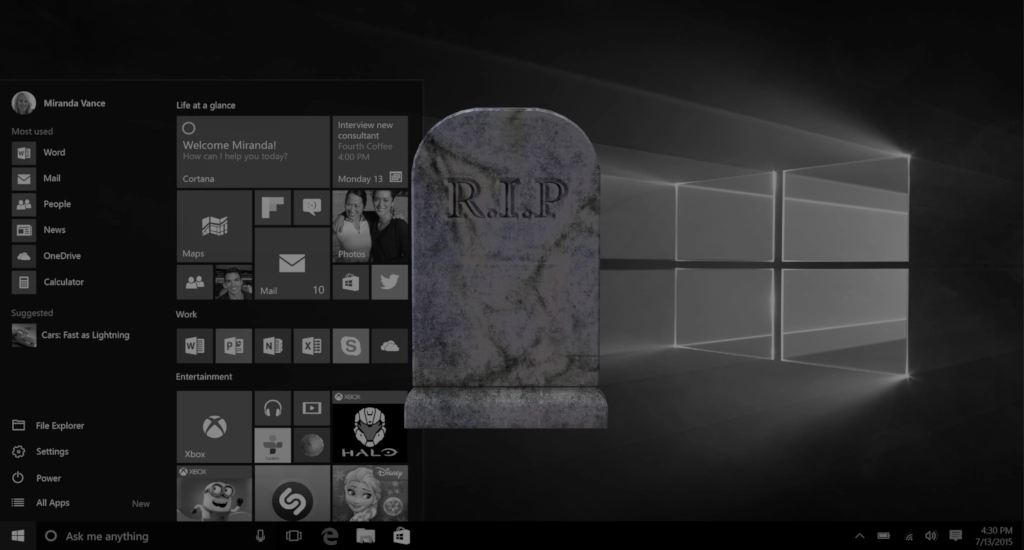
NVIDIA announced back in August that October 2026 will mark the release of the final GeForce Game Ready Driver for Windows 10, ending mainstream driver support for the decade-old operating system. The announcement comes from NVIDIA’s own support documentation and follows Microsoft’s earlier decision to end support for Windows 10 on October 14, 2025.
What this means for gamers
The practical impact is substantial. Starting in November, Windows 10 users will no longer receive new features, performance optimizations, or game‑specific patches in NVIDIA’s Game Ready drivers. Newer titles may run poorly or not at all on Windows 10 with modern NVIDIA GPUs.
Microsoft’s own Extended Security Updates program for Windows 10 runs through October 12, 2027 for consumers, after which even security coverage from Microsoft will cease. NVIDIA’s continued security support through 2029 provides a buffer, but the gaming experience will inevitably degrade as developers target Windows 11 and newer hardware features.
Windows 10 still lingers — but is fading
Despite Microsoft’s push toward Windows 11, a significant slice of the PC gaming population remains on Windows 10. According to the Steam Hardware Survey for August 2026, Windows 10 still accounts for roughly 23% of Steam users — a figure that has been steadily declining but remains substantial.
Meanwhile, Windows 11 continues to gain share, and Linux is surging in a way few predicted just a few years ago.
Linux gaming: from punchline to powerhouse
For gamers facing the Windows 10 cliff, switching to Linux is no longer a fringe or experimental choice. The rise of Valve’s Steam Deck and its underlying SteamOS — a Linux distribution — has catalyzed a quiet revolution in PC gaming on open‑source platforms.
According to recent reporting on the Steam Hardware Survey, Linux‑based operating systems reached a record 5.33% of all Steam users in March 2026, up from roughly 3.4% in January. While monthly figures fluctuate, the long‑term trend is unmistakably upward, with Linux hovering around 4% through mid‑to‑late 2026.
The engine behind this growth is Proton, Valve’s compatibility layer built on Wine that enables Windows games to run on Linux. As of 2026, Proton supports 96% of the top 500 Steam titles, and in some cases — such as Counter‑Strike — Proton performance actually outpaces native Windows, according to independent tech coverage.
Recent technical milestones like the NTSync driver integrated into SteamOS 3.7.20 have further closed the performance gap, making Linux a credible platform for all but the most demanding anti‑cheat‑heavy titles.
Why switch to Linux now?
For Windows 10 gamers staring down the end of Game Ready driver support, the case for migrating to Linux is stronger than ever:
- Driver longevity: Feature parity for NVIDIA GPUs on Linux continues uninterrupted. The same current drivers that deliver ray tracing, DLSS, and Reflex on Windows are available on Linux with full support.
- Game library: With Proton handling the vast majority of Steam titles and tools like Lutris and Wine supporting non‑Steam games, most gamers can run well over 90% of their library on Linux today.
- Performance: Thanks to Valve’s ongoing investment in Proton and the Vulkan graphics API, many titles run at equal or better frame rates on Linux compared to Windows, especially on NVIDIA hardware.
- Cost and control: Linux distributions are free, open‑source, and free of telemetry — a stark contrast to Microsoft’s Extended Security Update program, which requires payment for continued Windows 10 security coverage.
- Future‑proofing: As both Microsoft and NVIDIA shift focus to newer platforms, Linux is the only major OS actively gaining ground in the gaming world.
The transition path
For gamers considering the move, the process is more straightforward than ever:
- Dual‑boot setup: Install a modern Linux distribution(Linux Mint, Bazzite or CachyOS should do everything you need) alongside Windows 10 to preserve access to any remaining Windows‑only titles(rare few).
- NVIDIA proprietary drivers: Install the official NVIDIA Linux driver (Usually pre-installed through a “Driver manager App”) for full RTX feature support.
- Check compatibility: Resources like ProtonDB document which games work well on Proton and any tweaks needed.
The bottom line
NVIDIA’s decision to sunset Game Ready drivers for Windows 10 marks the end of an era — but also an opportunity. With Linux gaming now a mature, mainstream reality thanks to the Steam Deck effect and Proton’s rapid evolution, Windows 10 holdouts have a clear, supported path forward that doesn’t require upgrading to Windows 11 or buying new hardware.
For gamers who want to future‑proof their rigs, maintain access to the latest features, and avoid Microsoft’s ESU fees, switching to Linux is the most rational — and arguably the most exciting — move available in 2026.
Nvidia FAQ on the topic:
Q: Why is NVIDIA removing support for Windows 10 from Game Ready Drivers and NVIDIA Studio Drivers?
A: Microsoft has announced that support for Windows 10 will end on October 14, 2025. Given the large number of GeForce users currently using Windows 10, NVIDIA has opted to extend support for an additional year.Q: When will the final Game Ready Driver that supports Windows 10 go public?
A: October 2026Q: When will the first Game Ready Driver that doesn’t support Windows 10 go public?
A: November 2026Q: How long will Windows 10 continue to receive critical security driver updates from NVIDIA?
A: Security updates will continue through October 2029.
Source: TechPowerUp
 Buy me a Ko-fi
Support this blog ❤️