
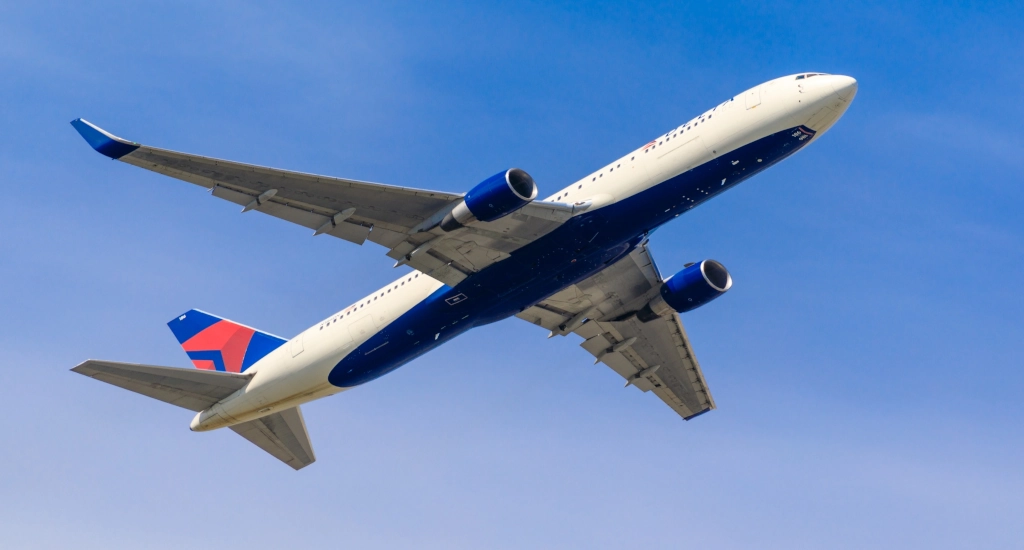
Nationwide Ground Stop
The United States suspended all flight departures on Friday after a communications failure swept through its air traffic control network, beginning in Chicago and affecting control centers across the country. The Federal Aviation Administration cited “extraordinary circumstances” in ordering the halt, which took effect shortly before 6 p.m. Brasília time (about 4 p.m. Eastern Time).
Transportation Secretary Sean Duffy confirmed early in the evening that the problem was affecting every air traffic control center in the nation — specifically, all Air Route Traffic Control Centers, which manage flights above 18,000 feet (about 5,500 meters). According to the FAA, the issue involves radio frequencies across the entire national airspace system. The agency told UOL that technicians were working to pinpoint the cause and would release further information as it became available.
Is a Cyberattack Involved?
Preliminary reports indicated the disruption is not a cyberattack, according to FBI officials who spoke with CNN. As night fell in the U.S., there was no record of any missing flight.
But James Waterhouse, an aerospace engineering professor at the University of São Paulo, told UOL that a possible cyberattack on the U.S. air traffic system cannot be ruled out. “Air traffic systems are very secure against cyberattacks, but they are not impenetrable,” he said. “It could also be a technical failure of the system — but if that happens, it raises a warning sign about the system’s degradation.”
Keeping Aircraft in the Air
Aircraft already in flight were instructed to stay on course, with the FAA asking flight crews to keep orbiting until they could land. In a statement, the agency said: “There was a temporary interruption in telecommunications — out of an abundance of caution, all flights were suspended. All flights have been accounted for, and international flights will be handled case by case.”
Waterhouse explained the protocol for pilots cut off from controllers: “In the absence of communication, you follow your flight plan and maintain altitude. You don’t change altitude or take any action that requires bilateral control. If control coordinates with you, you do that. This creates predictability of route and altitude as you get closer and someone is able to make contact.”
Flights that had not yet entered U.S. airspace returned to their airports of origin, including at least five originating in South America. Such turnbacks are normal under the circumstances, Waterhouse noted.
Delays Mount at U.S. Airports
At Newark Liberty International Airport in New Jersey, nearly every flight was delayed. While international departures were authorized, domestic operations continued to struggle, according to UOL projects editor Júlia Moióli, who reported that passengers received no official communication from the airport administration. “In the United Lounge, where I am, people are eating and drinking normally,” she said.
At Chicago O’Hare International Airport, crowds waited inside the terminals. “People are sitting on the airport floor waiting for the delay to be resolved,” CNN International correspondent Isabel Gonsales reported.
Across the country, more than 10,000 flights were delayed or canceled after the grounding, according to Reuters. FlightRadar data showed 3,100 aircraft were flying toward the United States at the height of the disruption; by 9 p.m. Brasília time (7 p.m. Eastern), about 700 planes were still over U.S. skies. Around that time, some flights in the Northeast began to be authorized again, with aircraft bound for Europe and the Caribbean preparing to operate, while domestic flights remained on the ground.
First National Shutdown Since 2023
The episode is the first nationwide flight suspension in the United States since January 2023. The previous event to paralyze flights within U.S. airspace was the September 11, 2001 attacks on the World Trade Center.
The U.S. currently has about 19,482 active airports, averages roughly 45,000 flights a day and carries more than 3 million passengers daily. Some 83 airlines operate in the country, including three of the world’s largest passenger carriers — American Airlines, Delta Air Lines and United Airlines. More than 30,000 flights were scheduled for the rest of the day, according to the Flighty app.
Washington has been debating how to modernize the technology air traffic controllers depend on, which is widely considered outdated, the Associated Press reported. Congress approved $12.5 billion last year for a modernization program: kilometers of aging copper wiring have been replaced with fiber-optic lines, and legacy radio systems are being gradually swapped out at airports nationwide. Duffy previously estimated that another $30 billion would be needed to complete the work, and the White House has begun negotiations with Congress to secure the funding.
Repercussions in Brazil
Brazil’s civil aviation regulator (Anac) advised passengers with trips to the United States to contact their airlines, and stressed that carriers must provide assistance and material support to customers. “Anac is monitoring flights between Brazil and the United States due to the takeoff restrictions at American airports,” the agency said in a statement. “For flights departing from Brazil to the U.S., we recommend that passengers check with their airlines to verify their flight status or any changes.”
GOL said it had two flights scheduled to leave the United States that evening — G3 7635, from Orlando to Brasília, at 9 p.m. local time (11 p.m. Brasília time), and G3 7749, from Miami to Brasília, at 9:35 p.m. local time (11:35 p.m. Brasília time). The airline told UOL it was following the FAA’s suspension and that “all future actions regarding these two flights will follow GOL’s commitment to safety, its number-one value.”
Weather Service Reports Widespread Outage
Adding to the day’s disruptions, the U.S. National Weather Service reported nationwide internet and communications failures of its own. In a notice on its official website, the agency said it was “experiencing nationwide internet and communications issues,” warning that users might be unable to access products on its pages or that those products might be outdated. “Technicians are actively working to resolve these issues as quickly as possible,” it said.
The service apologized but gave no timeline for restoring normal operations; local NWS offices continued issuing alerts and forecasts, and some information remained available on external websites.
There was no immediate indication of what had caused the communications failure. Authorities have offered no deadline for resolving it — Homeland Security Secretary Markwayne Mullin said Tuesday it was too early to draw conclusions — and the FAA said it would release further updates as the investigation continued.
 Buy me a Ko-fi
Support this blog ❤️