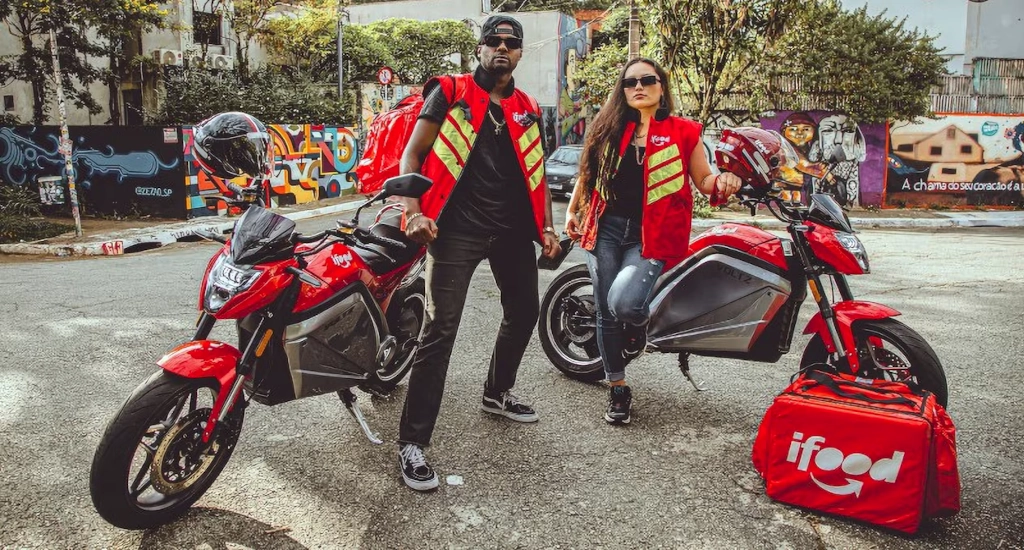
Brazilian delivery and ridesharing giants iFood and 99 have emerged as the primary financial backers of a R$304.5 million initiative aimed at accelerating the domestic production of electric motorcycles. Announced on Thursday (14), the project seeks to build an entirely new industrial chain for two-wheel electromobility in Brazil.
Structured by YvY Capital, the venture aims to manufacture and sell 600,000 electric motorcycles by 2035, a move expected to unlock more than R$5 billion in investments over the next decade.
Building a Local EV Ecosystem
The scope of the project extends far beyond merely encouraging the adoption of electric vehicles. The plan outlines the creation of a complete, end-to-end industrial infrastructure in Brazil, which will include the local production of:
- Vehicles and electric motors
- Batteries and electronic components
- Charging infrastructure
- Battery recycling facilities
99 has announced an injection of over R$45 million, establishing itself as the anchor investor in YvY Capital’s Two-Wheel Electromobility Fund. iFood has been a participant in the initiative since March. Together, the two tech giants belong to the Sustainable Mobility Alliance, a group of 31 companies dedicated to expanding electrification across Brazil.
Targeting the Western World’s Largest Motorcycle Market
The project targets a highly strategic market. Brazil currently has approximately 30 million motorcycles in circulation, making it the largest two-wheel market in the Western hemisphere. This figure is expected to climb to 40 million by the end of the decade.
Crucially, around 3 million Brazilians rely on motorcycles daily to generate income. This professional segment is where project organizers believe electrification will find its strongest economic momentum. Financial estimates from the fund indicate that transitioning to electric models could cut fuel and maintenance costs by 30% to 60%.
“The investment is vital because electric vehicles protect the environment by reducing emissions, while also cutting fueling and maintenance costs by up to 60%, thereby boosting the net income of delivery drivers,” stated Thiago Hipolito, Innovation Director at 99.
Neo-Industrialization and Next Steps
While environmental benefits are central to the narrative, the project is heavily pitched as a reindustrialization play. The fund plans to support everything from the construction of factories to the development of startups, ride-sharing platforms, fleet management, and financial solutions designed to make EV access easier.
“The Brazilian two-wheel electric vehicle platform has the potential to transform the national market within 10 years, driving neo-industrialization and increasing production density in Brazil,” said Bruno Aranha of YvY Capital.
In practice, the initiative is a bold attempt to resolve one of the classic bottlenecks of green technology: establishing a robust local supply chain before consumer demand fully matures. The ultimate challenge for the alliance will be scaling this initial investment into mass industrial production, while successfully convincing professional riders that making the switch to electric makes undeniable financial sense.