
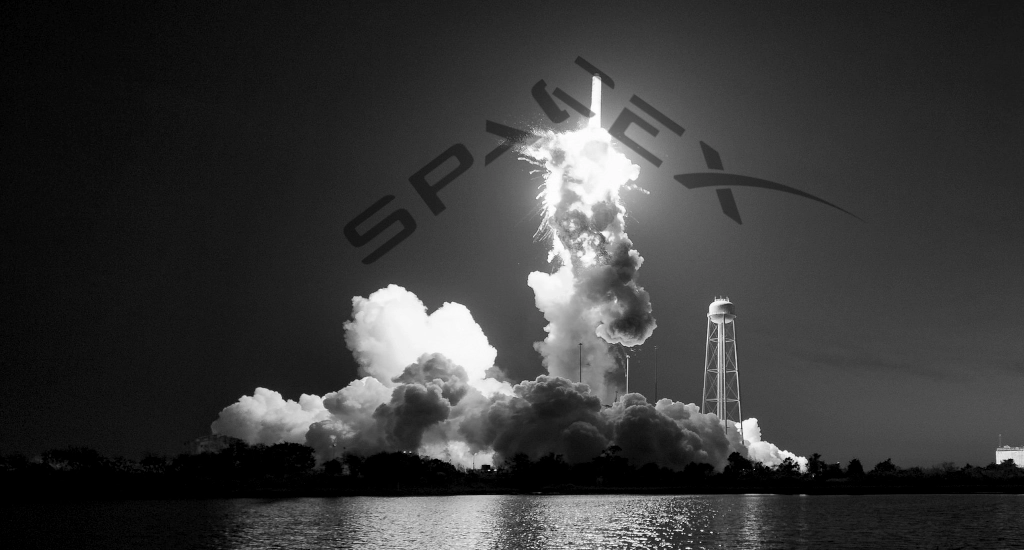
SpaceX was built to “make humanity a multi-planetary species”. But look at its 2026 balance sheet, and you’ll see a company that has entirely shifted its trajectory. Instead of aiming for Mars, Elon Musk’s aerospace juggernaut is being actively cannibalized to keep his struggling artificial intelligence division—xAI and its Grok chatbot—alive.
By merging xAI into SpaceX earlier this year under the newly formed “SpaceXAI” banner, Musk didn’t just restructure his empire ahead of a massive IPO; he strapped a sinking ship to his most successful rocket. The financial reality is stark: SpaceX is being hollowed out to subsidize a massive AI cash burn.
The Great AI Bailout
The most glaring red flag came in March 2026, when SpaceX took out a massive $20 billion bridge loan. This wasn’t to fund the next generation of Starship or expand satellite constellations. The funds were used specifically to wipe out xAI’s debt stack—which notably included loans inherited from Musk’s 2022 Twitter takeover.
By executing this maneuver, Musk effectively transferred the crippling financial liabilities of his social media and AI vanity projects directly onto SpaceX’s balance sheet. A company once defined by lean, iterative aerospace engineering is now saddled with the weight of rescuing Grok.
Capital Expenditures: Rockets vs. Servers
The sheer volume of cash being diverted from space exploration to server farms is staggering. In the first quarter of 2026 alone, the AI division devoured $7.7 billion in capital expenditures. Much of this is fueling the construction of xAI’s massive data centers—including the “Macroharder” facility and the Colossus supercomputer in Memphis.
Because local power grids simply cannot handle the 1-gigawatt demand of these AI clusters, SpaceX is also footing the bill for off-grid infrastructure. The company is pouring $2.8 billion into natural gas turbines just to keep Grok plugged in. To put that in perspective: in 2025, xAI’s capital expenditures ($12.7 billion) vastly exceeded the combined spending for both SpaceX’s rocket launch services and its entire Starlink division ($8.0 billion).
The $60 Billion Cursor Gamble
Perhaps the most glaring example of SpaceX’s shifting identity is its desperate move to buy its way out of an AI deficit. Because Grok has severely lagged behind competitors like Anthropic and OpenAI in software development and coding capabilities, SpaceX has stepped in to fill the gap with astronomical capital.
In April 2026, SpaceX struck a staggering deal to acquire the AI coding startup Cursor. The structure of the agreement commits SpaceX to an immediate $10 billion collaboration and breakup fee, with the option to buy Cursor outright for $60 billion by the end of the year. Instead of investing in orbital mechanics or lunar landers, SpaceX is now throwing up to $60 billion at a code-completion tool just to keep xAI relevant in the developer market.
Starlink Profits Are Subsidizing Grok’s Losses
All of this spending would make sense if xAI were a highly profitable enterprise. It is not.
xAI is hemorrhaging money at an alarming rate, posting an operating loss of $6.4 billion in 2025. That bleeding has only accelerated, with the AI division losing another $2.47 billion in Q1 2026 alone. While Grok boasts 117 million monthly active users, a fraction of them—only 1.9 million—are actually paying for advanced models.
This means the highly profitable core operations of SpaceX, particularly its Starlink satellite internet, are actively subsidizing the AI division’s billion-dollar-a-month burn rate. Every satellite launched and every internet subscription sold is now essentially working to offset Grok’s astronomical operating losses.
A Fatal Trajectory?
SpaceX’s engineers revolutionized spaceflight by proving that rockets could be reusable and cost-effective. Yet, the company is now bound to a fundamentally different business model: an AI arms race that requires endless, massive capital injections with highly uncertain returns.
By forcing SpaceX to absorb xAI’s debt, fund its multibillion-dollar data centers, and cover its astronomical operating losses, Musk has shifted the company’s core mission. SpaceX is no longer just a focused aerospace pioneer. It has become a financial life raft for Grok—and if the AI bet fails to pay off, it threatens to drag the world’s most successful space company down with it.
Source: The Guardian, PitchBook, SocialMediaToday, The Guardian
 Buy me a Ko-fi
Support this blog ❤️