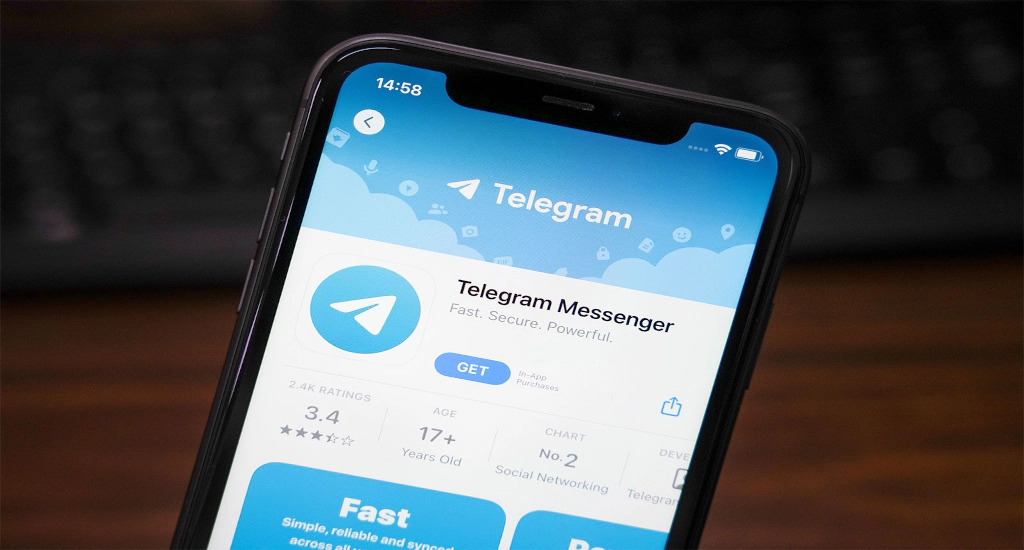
Telegram is launching its most ambitious contest for content creators to date, offering a $200,000 prize fund to creators who can produce viral videos about digital freedom — a move timed against mounting government pressure on social media platforms across Europe and beyond.
The Contest: Create, Publish, Go Viral
Under the new initiative, creators are tasked with producing a video about digital freedom that incorporates at least some ideas and footage from Pavel Durov’s recent speech on the topic. Videos must be posted to TikTok, Instagram, YouTube, Snapchat Spotlights or X and reach 10,000+ authentic organic views to qualify for a share of the prize pool.
Key details:
- Prize fund: $200,000 (shared among qualifying entries)
- Deadline: July 15, 23:59 Dubai time
- Results announced: August 2026
- Submission instructions: To be published July 6 in Telegram’s official channel
- Rules: Videos must use material from Durov’s speech; creators may add any other media or ideas; multiple submissions across platforms are allowed; any language or creation tool is permitted
- Quality control: Low-quality entries or those suspected of artificial view inflation will be disqualified
The Speech That Started It All
The contest draws its inspiration from a speech Durov delivered two weeks ago, in which he framed the current moment as a “Titanic-like predicament” for personal freedoms. In a sweeping address, Durov compared modern society to passengers on the doomed ocean liner who, even after hitting the iceberg, refused to board lifeboats until it was too late.
“Our ship has already hit the iceberg. We have already started to sink without even realizing it. And I’m talking about the ship of our personal freedoms,”
– Durov said, drawing applause from the audience.
Drawing on two decades of experience running major social platforms — including VK in Russia and Telegram globally — Durov argued that methods once associated with authoritarian regimes are now migrating westward.
The UK’s Proposed Under-16 Ban
Durov’s speech and the contest arrive as the UK government advances plans to ban social media access for anyone under 16 under the Online Safety Act. The law would require users to verify their age via ID, facial scan or bank card before accessing platforms.
Durov contends this approach is not only ineffective but actively dangerous. He points to Russia’s 2018 ban on Telegram, which — according to his figures — left 95% of Russian teenagers still using the app via VPNs. Iran’s similar ban produced the same result, he argued. In both cases, he said, governments invested billions in blocking VPNs and still failed.
“When you ban social media for teenagers, they just switch to VPNs. And once they’re using VPNs, all kinds of nasty, illegal content that was previously blocked becomes accessible to them. The children end up in greater danger than before,”
– Durov warned.
Surveillance, Censorship and Selective Enforcement
Beyond age verification, Durov raised alarms about broader surveillance initiatives like the EU’s proposed “Chat Control” — legislation that would require messaging apps to implement backdoors into encrypted communications so authorities could automatically monitor for illegal content. Child protection, he argued, is being used as a “pretext” to expand state control over political speech.
He cited what he described as a private admission by the British government in a High Court submission: that the main objective of the Online Safety Act was “capturing large platforms with significant influence over public discourse” — not child safety.
Durov also warned about selective enforcement, a tactic he says originated in authoritarian states: regulators pass contradictory, impossible-to-comply-with laws, then selectively prosecute dissident platform owners while sparing loyalists. He referenced Elon Musk’s public claims that the European Commission offered him a secret deal — censorship in exchange for regulatory leniency — which Musk reportedly refused.
A Personal History of Repression
Speaking from experience, Durov recounted his own run-ins with authorities: a 2013 criminal investigation in Russia, ongoing legal troubles there, and his arrest in Paris in 2024, where he says French intelligence offered him a secret deal to silence political voices in exchange for dropping charges. He declined, and remains under investigation.
A poignant moment in the speech came when Durov described a court translator — a Soviet emigrant — who, after witnessing his Paris interrogation, told him: “I left the Soviet Union in the 80s because I wanted to escape an environment where my freedoms are limited. But now I feel like the Soviet Union is catching up with me.”
The Urgency: No Backup Plan
Durov closed with the Titanic metaphor, warning that there is no “backup civilization” if Western freedoms erode:
“There’s no second West. There’s no backup civilization. For decades, for centuries, the West has been a guiding star for everybody who loved freedom. And we need to preserve that. If the ship of western freedom sinks, the rest of the world is likely to follow.”
How to Participate
Creators interested in the contest should prepare videos that blend Durov’s speech material with original content advocating for digital freedom. Submission links will be collected starting July 6, with the deadline for posting videos set for July 15. Winners will be announced in August.
The contest signals Telegram’s willingness to mobilize its global community in defense of an open internet — and to put its money where its mouth is as regulatory battles intensify worldwide.
 Buy me a Ko-fi
Support this blog ❤️